- New
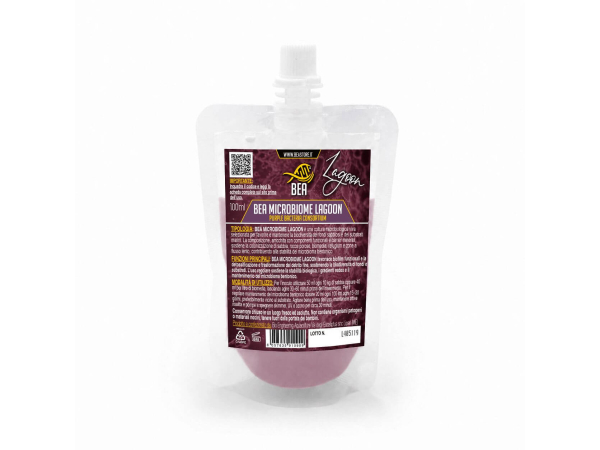
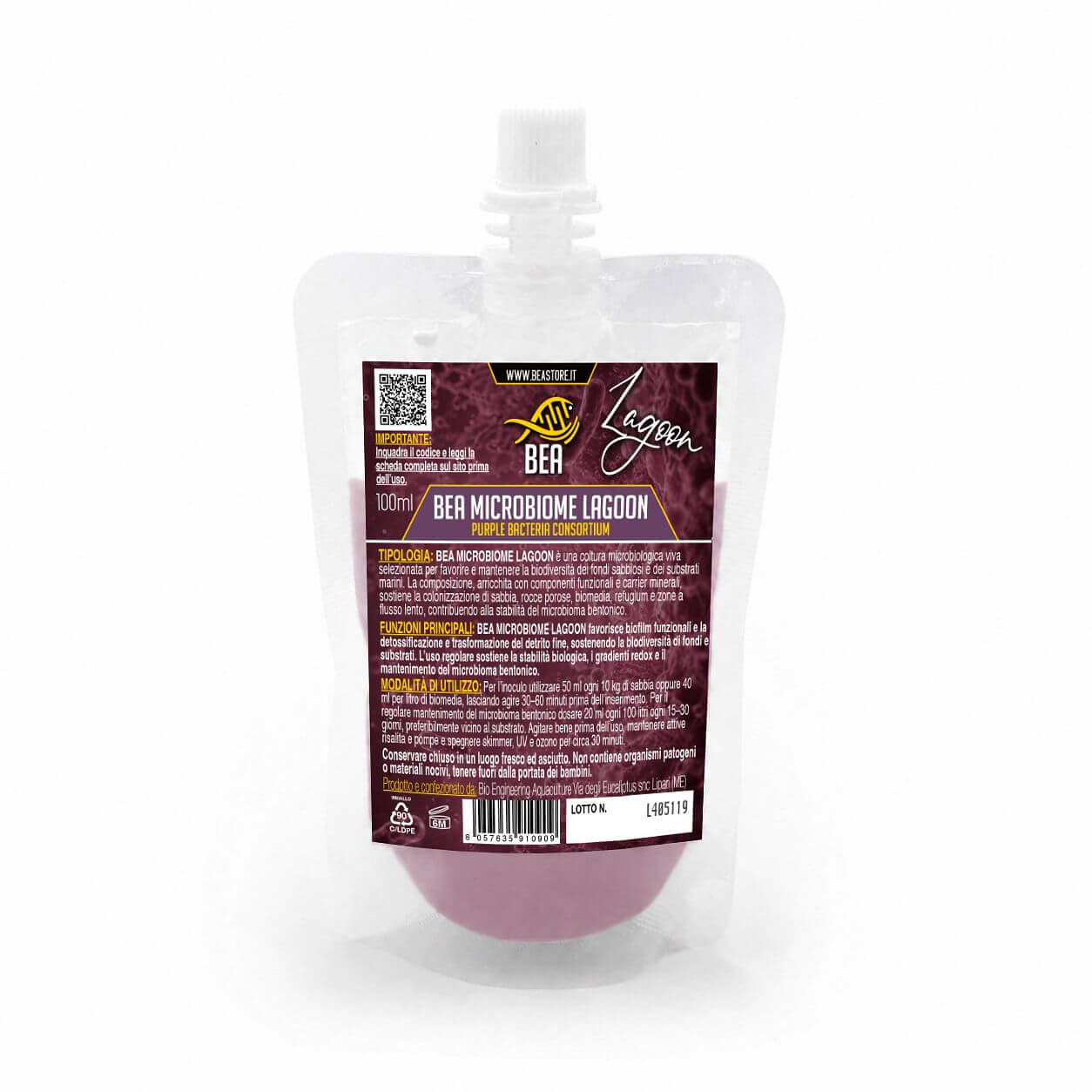



BEA Microbiome Lagoon 100 ml is a live microbiological culture designed to enrich the biodiversity of sand, porous rocks, and biological media. It promotes the development of biofilms and the biological activity of the benthic microbiome in the marine aquarium.





| Date Maximum delivery |
|
|---|---|
| Express | Monday 21 September |
| Pick-up point |
Monday 21 September
Wednesday 23 September |
| Home |
Tuesday 22 September
Wednesday 23 September |
| See all delivery fees | Cart amount | Delivery fees |
|---|---|---|
| Colis sur pré-commande | 0 à 158,98 € | 7,80 € |
| 158,99 à 248,98 € | Free | |
| 248,99 à 10 000 € | Free | |
| DPD Livraison en relais Pickup | 0 à 68,98 € | 6,90 € |
| 68,99 à 10 000 € | Free | |
| DPD Livraison sur lieu de travail | 0 à 10 000 € | 7,80 € |
| DPD Livraison à domicile Predict sur créneau horaire | 0 à 68,98 € | 7,80 € |
| 68,99 à 158,98 € | 7,80 € | |
| 158,99 à 10 000 € | Free | |
| En Relais GLS | 0 à 68,98 € | 6,90 € |
| 68,99 à 10 000 € | Free | |
| EXPRESS 24H Vivant - Live - Lebenden - Vivo - Levend | 0 à 248,99 € | 24,90 € |
| 248,99 à 100 000 € | Free | |
| GLS À domicile | 0 à 68,98 € | 7,80 € |
| 68,99 à 158,98 € | 7,80 € | |
| 158,99 à 10 000 € | Free | |
| Livraison palette – Pallet Delivery | 0 à 50 kg | 50 € |
| UPS Matériel Domicile EXPRESS 24H | 0 à 15 000 € | 19,90 € |
| Country | Carrier | Cart amount | Delivery fees |
|---|---|---|---|
| Europe zone 1 | Colis sur pré-commande | 0 à 158,98 € | 15,90 € |
| 158,99 à 248,98 € | 15,90 € | ||
| 248,99 à 10 000 € | Free | ||
| DPD Livraison en relais Pickup | 0 à 68,98 € | 6,90 € | |
| 68,99 à 10 000 € | Free | ||
| DPD Livraison internationale | 0 à 248,98 € | 15,90 € | |
| 248,99 à 10 000 € | Free | ||
| DPD Livraison sur lieu de travail | 0 à 10 000 € | 7,80 € | |
| EXPRESS 24H Vivant - Live - Lebenden - Vivo - Levend | 0 à 248,99 € | 29,89 € | |
| 248,99 à 100 000 € | Free | ||
| Livraison palette – Pallet Delivery | 0 à 50 kg | 259 € | |
| France | Colis sur pré-commande | 0 à 158,98 € | 7,80 € |
| 158,99 à 248,98 € | Free | ||
| 248,99 à 10 000 € | Free | ||
| DPD Livraison en relais Pickup | 0 à 68,98 € | 6,90 € | |
| 68,99 à 10 000 € | Free | ||
| DPD Livraison sur lieu de travail | 0 à 10 000 € | 7,80 € | |
| DPD Livraison à domicile Predict sur créneau horaire | 0 à 68,98 € | 7,80 € | |
| 68,99 à 158,98 € | 7,80 € | ||
| 158,99 à 10 000 € | Free | ||
| En Relais GLS | 0 à 68,98 € | 6,90 € | |
| 68,99 à 10 000 € | Free | ||
| EXPRESS 24H Vivant - Live - Lebenden - Vivo - Levend | 0 à 248,99 € | 24,90 € | |
| 248,99 à 100 000 € | Free | ||
| GLS À domicile | 0 à 68,98 € | 7,80 € | |
| 68,99 à 158,98 € | 7,80 € | ||
| 158,99 à 10 000 € | Free | ||
| Livraison palette – Pallet Delivery | 0 à 50 kg | 50 € | |
| UPS Matériel Domicile EXPRESS 24H | 0 à 15 000 € | 19,90 € | |
| Europe zone 2 | Colis sur pré-commande | 0 à 158,98 € | 39,90 € |
| 158,99 à 248,98 € | 39,90 € | ||
| 248,99 à 10 000 € | 39,90 € | ||
| DPD Livraison en relais Pickup | 0 à 68,98 € | 12,90 € | |
| 68,99 à 10 000 € | 12,90 € | ||
| DPD Livraison internationale | 0 à 248,98 € | 39,90 € | |
| 248,99 à 10 000 € | 39,90 € | ||
| EXPRESS 24H Vivant - Live - Lebenden - Vivo - Levend | 0 à 248,99 € | 39,90 € | |
| 248,99 à 100 000 € | 39,90 € | ||
| Livraison palette – Pallet Delivery | 0 à 50 kg | 359 € | |
| Suisse | Colis sur pré-commande | 0 à 158,98 € | 39,90 € |
| 158,99 à 248,98 € | 39,90 € | ||
| 248,99 à 10 000 € | 39,90 € | ||
| DPD Livraison en relais Pickup | 0 à 68,98 € | 26,90 € | |
| 68,99 à 10 000 € | 26,90 € | ||
| DPD Livraison internationale | 0 à 248,98 € | 39,90 € | |
| 248,99 à 10 000 € | 39,90 € | ||
| Livraison palette – Pallet Delivery | 0 à 50 kg | 389 € | |
| Suisse - EXPRESS 24H Vivant - Live - Lebenden - Vivo – Levend | 0 à 100 000 € | 44,90 € |

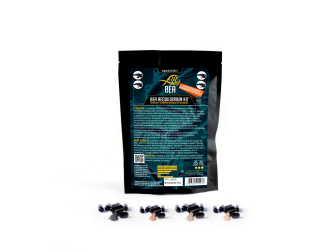
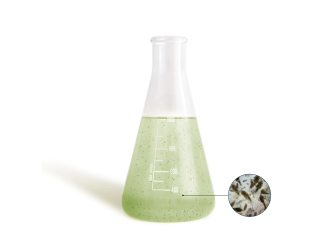
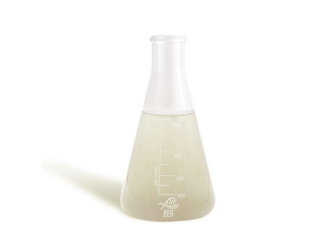



BEA Microbiome Lagoon 100 ml is a living, phototrophic, benthic microbiological culture specially selected to promote biodiversity in the bottom and substrates of a reef marine aquarium.
Unlike a conventional bacterial culture mainly intended for the nitrogen cycle, BEA Microbiome Lagoon acts on specific biological niches: sand, porous rocks, biomedia, refugium, biological surfaces in the sump, and areas with lower water flow.
Its use makes it possible to inoculate, reactivate, and maintain a rich and diverse benthic microbiome. It thus contributes to the development of functional biofilms and the natural biological activity of the various substrates present in the aquarium.
BEA Microbiome Lagoon is oriented toward microbiological communities adapted to areas where colonizable surfaces, diffuse light, organic matter, and low local oxygen concentrations meet.
This makes it particularly suitable for the first millimeters of sand, the pores of rocks, biomedia, refugiums, and the various biological microzones that do not necessarily benefit from intense water movement.
The culture is enriched with functional components, mineral supports, and trace elements that help maintain and develop this living microbiological community.
The microbiological activity of the substrate plays an important role in the overall biological functioning of a reef aquarium. Over time, sand and porous materials host many microbial communities capable of using and transforming part of the organic matter that accumulates there.
BEA Microbiome Lagoon contributes in particular to:
Promoting biological colonization of sand, porous rocks, biomedia, and the refugium.
Supporting the formation of functional biofilms on various colonizable surfaces.
Promoting the breakdown of fine detritus, algal residues, and part of the complex organic matter.
Contributing to the stability of redox gradients and microenvironments that naturally have lower oxygen concentrations.
Maintaining an active and diverse benthic microbiome through regular additions to the aquarium.
| Zone | Use |
|---|---|
| Sand | Promotes biological colonization and the development of a diverse benthic microbiome. |
| Porous rocks | Colonizes pores and microzones that provide favorable conditions for different microbiological communities. |
| Biomedia | Allows inoculation and biological enrichment of porous filtration media. |
| Refugium | Promotes the microbiological biodiversity of the surfaces and substrates present in this area. |
| Sump | Can be used near biological surfaces and filter materials. |
| Low-flow areas | Contributes to the development of microbiological communities adapted to these microenvironments. |
Modern reef aquariums are often started with new sand, dead rock, artificial biomedia, and prepared seawater. These materials offer excellent control during startup, but their initial microbiological biodiversity is naturally limited.
BEA Microbiome Lagoon makes it possible to directly inoculate these surfaces in order to support their biological maturation. It can be spread on new sand or used to prepare biomedia before they are installed in the aquarium.
Its use is not limited to startup, however. Regular additions can also support the microbiological biodiversity of a mature reef aquarium or help biologically reactivate a depleted system.
| Use | Recommended dosage |
|---|---|
| New sand | 50 ml for 10 kg of sand. |
| New biomedia | 40 ml for 1 L of biomedia. |
| Regular maintenance | 20 ml per 100 L every 15 to 30 days. |
| Already installed bottom, SSB or DSB | Distribute the product in several points of the substrate using a pipette or syringe. |
| Skimmerless aquarium | Start with about half the recommended dosage. |
For new sand, use 50 ml of BEA Microbiome Lagoon for 10 kg of sand.
Spread the microbiological culture evenly over the substrate to promote uniform inoculation. After applying the product, the sand should not be rinsed.
To prepare new biomedia, use 40 ml of Microbiome Lagoon for 1 L of biomedia.
Place the biomedia in a container of seawater, then add the required amount of BEA Microbiome Lagoon.
Leave the materials in contact with the culture for 30 to 60 minutes before installing them in the sump or biological compartment of the aquarium.
The water used for inoculation can then be added to the aquarium, taking into account the dosage planned for the total system volume.
In an aquarium that already has a sand bed, BEA Microbiome Lagoon can be applied directly using a pipette or syringe.
Distribute the planned amount across several points of the substrate rather than concentrating all the product in one area.
As a guideline, for a bottom of approximately 45 × 45 cm with 5 cm of sand, BEA recommends an amount of 50 to 100 ml distributed over the entire surface.
To promote uniform colonization, favor several small injection points in the sand rather than a large addition in a single spot.
To maintain the biological biodiversity of a marine aquarium, use 20 ml per 100 L every 15 to 30 days.
The product can preferably be introduced near the sand, biomedia, porous rocks, or the various biological surfaces present in the sump.
Circulation pumps and the return pump may remain in operation to maintain overall water movement.
It is recommended to turn off the skimmer, UV sterilization, and ozone for about 30 minutes after adding BEA Microbiome Lagoon.
BEA recommends favoring small, regular additions rather than large, occasional doses. The frequency can be increased in a young or biologically depleted aquarium and reduced in a mature aquarium whose biodiversity is already well established.
Because BEA Microbiome Lagoon is a living microbiological culture, its appearance may naturally change. A slight deposit, a variation in the appearance of the liquid, or a slight sulfur smell may be observed and are compatible with the microbiological nature of the preparation and the mineral supports it contains.
Shake vigorously before each use to properly resuspend the biomass and mineral supports.
A slight cloudiness of the water may appear temporarily after use. When restarted, the skimmer may also temporarily produce more foam. These phenomena are generally temporary.
BEA Microbiome Lagoon and BEA Microbiome Cairns are complementary. They are intended to colonize different biological niches in the reef aquarium.
| Product | Preferred areas | Type of microbiome |
|---|---|---|
| Microbiome Lagoon | Sand, substrates, porous rocks, biomedia, refugium, and low-flow areas. | Living phototrophic and benthic culture. |
| Microbiome Cairns | Rocks, corals, biofilms, and properly oxygenated reef surfaces. | Microbiological culture mainly oriented toward exposed reef surfaces. |
The complementary use of Lagoon and Cairns thus makes it possible to enrich different biological areas of the aquarium, from the microbiome of the sand and substrates to the more exposed surfaces of the reef décor.
| Brand | BEA Bio Engineering Aquaculture |
| Product | Microbiome Lagoon |
| Type | Living marine microbiological culture, phototrophic and benthic |
| Use | Marine and reef aquarium |
| Volume | 100 ml |
| Contents | Living microbiological culture enriched with functional components, mineral supports, and trace elements |
| Preferred areas | Sand, porous rocks, biomedia, refugium, sump, and low-flow areas |
Keep the sealed sachet in a cool, stable place, away from heat sources.
Due to the presence of phototrophic organisms, BEA recommends storage in an environment with diffuse natural light, in order to help maintain the biological balance of the culture.
Shake the product vigorously before each use.
BEA Microbiome Lagoon 100 ml is a live microbiological culture designed to enrich the biodiversity of sand, porous rocks, and biological media. It promotes the development of biofilms and the biological activity of the benthic microbiome in the marine aquarium.