Language:
-
-
- Angelfish
- Anthias
- Assorted marine fish
- Basslets (Gramma)
- Batfish (Platax)
- Beginner-friendly species
- Blennies
- Butterflyfish
- Captive-bred marine fish
- Clownfish
- Comets (Calloplesiops)
- Damselfish
- Dottybacks (Pseudochromis)
- Filefish
- Gobies
- Groupers
- Hawkfish
- Macroalgae for refugium
- Mandarin dragonets
- Nano reef
- Pufferfish and boxfish
- Rainbow wrasses
- Surgeonfish
- Traps and transport bags
- Triggerfish
- Useful species
- Wrasses
-
- Abyzz
- Aqua Illumination
- Aqua Medic
- Aquaforest
- Aquaprint UK
- Aquarium Systems
- Aquaroche
- Aquavie
- AquaVitro
- Arka
- Artreef Rocks
- ATI
- Auto Aqua
- BEA Aquaculture
- Blue Life USA
- Blue Marine
- Bubble Magus
- CaribSea
- Chemi-Pure
- Colombo
- D-D
- Deltec
- Dennerle
- Druide Coral ADS
- DSR
- Dutchreefrock
- DVH
- Easy Life
- Easy Reefs
- EcoTech Marine
- Eden
- Eheim
- Elos
- eSHa
- Fauna Marin
- Flipper
- Glamorca
- GNC
- GroTech
- Hanna Instruments
- Hikari
- Hobby / Dupla
- Illumagic
- INVE Selco
- JBL
- Jebao / Jecod
- Joe's Juice
- Jurassic Rock
- Juwel
- Kessil
- KZ Korallen-Zucht
- Mag-Float
- Marco Rocks
- Marine Direct
- MarinePure
- Maxspect
- Microbe-Lift
- Milwaukee
- Modern reef
- Nature's Ocean
- Neptune Systems
- Nyos
- Oase
- Oceamo
- Ocean Nutrition
- Pacific Sun
- Philips
- Polyp Lab
- Pontec
- PoseidonArtRocks
- Preis
- Prodibio
- RAH aquacultured phytoplankton and zooplankton
- RecifAtHome clothing and merchandise
- Red Sea
- Reef artists
- Reef Breeders
- Reef Coaching
- Reef Culture
- Reef Factory
- Reef Octopus
- Royal Exclusiv
- Royal Nature
- Salifert
- Seachem
- Sicce
- Skimz
- Superfish
- Triton
- Tropic Creations
- Tropic Marin
- Tunze
- Turtle System
- Two Little Fishies
- Vitalis
- Vivid Creative Aquatics
- WaterBox
- Waterlink
-
- Aquarium chillers
- Aquarium heaters
- Aquarium pumps
- Aquarium substrates and salts
- Auto top-off and reservoirs
- Books
- CO2 equipment
- Controllers
- Coral accessories
- Fish and coral care
- Maintenance and cleaning
- Pipes, valves, PVC and silicone
- Protein skimmers
- Reactors
- Reef aquarium lighting
- Reef aquariums
- Reef filtration
- Reef supplements
- Reverse osmosis units
- Saltwater fish food
- UV sterilizers and ozone
- Water testing and analysis
- Water treatments
-
- Aquascaping
- Freshwater aquarium lighting
- Freshwater aquarium pumps
- Freshwater aquariums
- Freshwater bacteria
- Freshwater decoration
- Freshwater filtration
- Freshwater food
- Freshwater livestock
- Freshwater sand
- Freshwater treatments
- Garden ponds
- Miscellaneous freshwater products
- Order by email
- Shrimp breeding
- Contact
Nitrate removers
Anti-Nitrates
The Anti-Nitrates category includes media and methods aimed at effectively reducing dissolved nitrate (NO₃⁻) concentrations, essential for preventing unwanted algae blooms and maintaining a balanced nutrient ratio.
Operating Principles
- Denitrification bed: anaerobic biofilter or fixed-bed reactor using supports loaded with denitrifying bacteria to convert nitrates into gaseous nitrogen.
- Biological zeolite: porous mineral support that adsorbs ammonium and nitrite ions, limiting nitrate formation.
- Ion exchange resins: specific media (e.g. Poly-Bio-S Ultra) to directly capture nitrates through ion exchange.
- Enriched activated carbon: marine or catalytic carbon (Carb L, Phos 0.04 modified) promoting partial adsorption of nitrates and organics.
Advantages
- Stable reduction of NO₃⁻: long-term control of nitrates without sudden fluctuations.
- Algae reduction: limiting brown or green blooms linked to nutrients.
- Adaptability: choice of media according to volume and pollution level (zeolite for intermittent use, anaerobic biofilter for continuous use).
- Ease of integration: media in reactor, basket, or cartridge compatible with most filtration systems.
Usage Recommendations
- Install an anaerobic biofiltration reactor (e.g., Fluidized Denitrator) for a flow rate of 5–10 mL/min per 100 L of volume.
- Add 100–200 g of biological zeolite in a fixed-bed filter or flow cartridge, to be renewed every 4–6 weeks.
- For rapid needs, use 50–100 g of ion exchange resin (Poly-Bio-S Ultra) for 100 L, replaced as soon as the capacity reaches 60–70%.
- Combine with regular NO₃⁻ monitoring (AquaHomeTest NO₃ or ICP) every week to adjust the amount of media.
- After treatment, monitor the NO₃⁻/PO₄³⁻ ratio to ideally maintain 100:1 and avoid nutrient deficiencies for corals.
Sort by:
There are 31 products.




In stock - Dispatched within 24 hours
Price:
€16.80
Regular price: €22.40
-25%

In stock - Dispatched within 24 hours
Price:
€5.93
Regular price: €7.90
-25%


In stock - Dispatched within 24 hours
Price:
€15.68
Regular price: €20.90
-25%

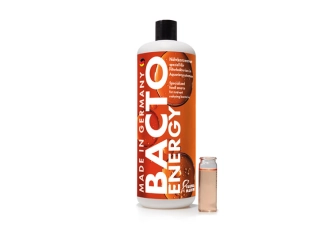


In stock - Dispatched within 24 hours
Price:
€19.59
Regular price: €24.49
-20%

In stock - Dispatched within 24 hours
Price:
€27.99
Regular price: €34.99
-20%