- -10%
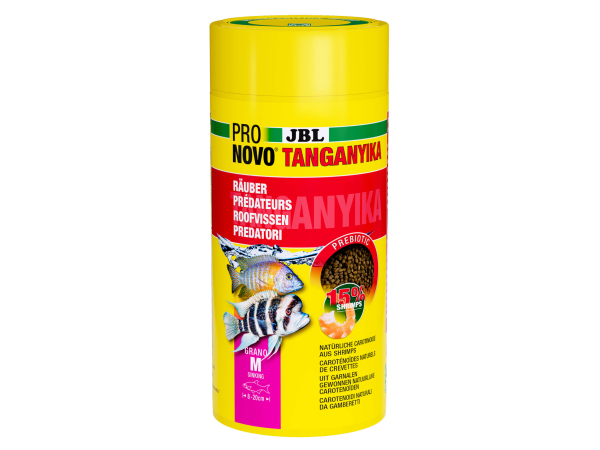
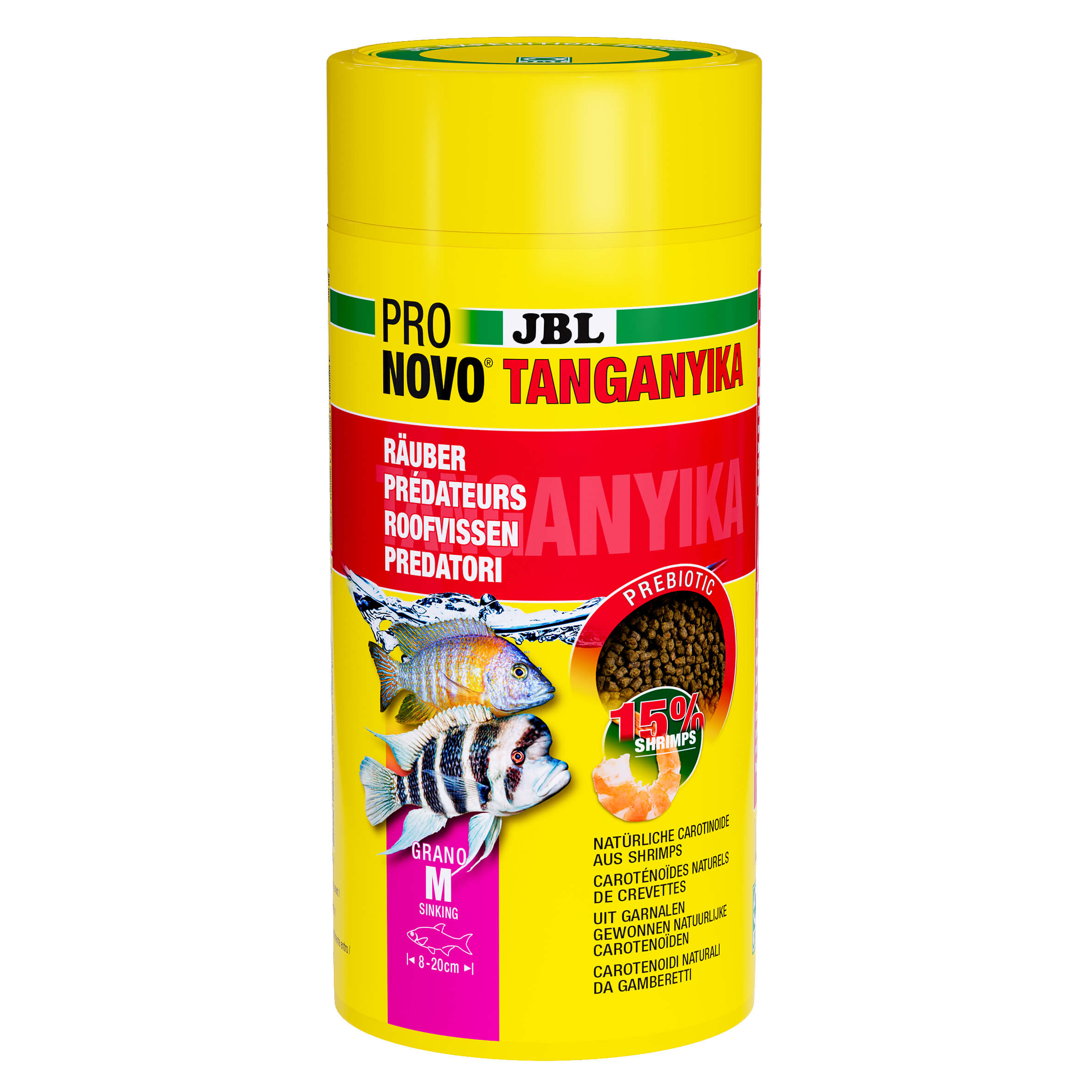



Prebiotic food JBL PRONOVO TANGANYIKA GRANO M 1000 ml for predatory African cichlids, promoting healthy digestion, high palatability, and intense natural coloration.





| Date Maximum delivery |
|
|---|---|
| Express | Monday 05 October |
| Pick-up point |
Monday 05 October
Wednesday 07 October |
| Home |
Tuesday 06 October
Wednesday 07 October |
| See all delivery fees | Cart amount | Delivery fees |
|---|---|---|
| Colis sur pré-commande | 0 à 158,98 € | 7,80 € |
| 158,99 à 248,98 € | Free | |
| 248,99 à 10 000 € | Free | |
| DPD Livraison en relais Pickup | 0 à 68,98 € | 6,90 € |
| 68,99 à 10 000 € | Free | |
| DPD Livraison sur lieu de travail | 0 à 10 000 € | 7,80 € |
| DPD Livraison à domicile Predict sur créneau horaire | 0 à 68,98 € | 7,80 € |
| 68,99 à 158,98 € | 7,80 € | |
| 158,99 à 10 000 € | Free | |
| En Relais GLS | 0 à 68,98 € | 6,90 € |
| 68,99 à 10 000 € | Free | |
| EXPRESS 24H Vivant - Live - Lebenden - Vivo - Levend | 0 à 248,99 € | 24,90 € |
| 248,99 à 100 000 € | Free | |
| GLS À domicile | 0 à 68,98 € | 7,80 € |
| 68,99 à 158,98 € | 7,80 € | |
| 158,99 à 10 000 € | Free | |
| Livraison palette – Pallet Delivery | 0 à 50 kg | 50 € |
| UPS Matériel Domicile EXPRESS 24H | 0 à 15 000 € | 19,90 € |
| Country | Carrier | Cart amount | Delivery fees |
|---|---|---|---|
| Europe zone 1 | Colis sur pré-commande | 0 à 158,98 € | 15,90 € |
| 158,99 à 248,98 € | 15,90 € | ||
| 248,99 à 10 000 € | Free | ||
| DPD Livraison en relais Pickup | 0 à 68,98 € | 6,90 € | |
| 68,99 à 10 000 € | Free | ||
| DPD Livraison internationale | 0 à 248,98 € | 15,90 € | |
| 248,99 à 10 000 € | Free | ||
| DPD Livraison sur lieu de travail | 0 à 10 000 € | 7,80 € | |
| EXPRESS 24H Vivant - Live - Lebenden - Vivo - Levend | 0 à 248,99 € | 29,89 € | |
| 248,99 à 100 000 € | Free | ||
| Livraison palette – Pallet Delivery | 0 à 50 kg | 259 € | |
| France | Colis sur pré-commande | 0 à 158,98 € | 7,80 € |
| 158,99 à 248,98 € | Free | ||
| 248,99 à 10 000 € | Free | ||
| DPD Livraison en relais Pickup | 0 à 68,98 € | 6,90 € | |
| 68,99 à 10 000 € | Free | ||
| DPD Livraison sur lieu de travail | 0 à 10 000 € | 7,80 € | |
| DPD Livraison à domicile Predict sur créneau horaire | 0 à 68,98 € | 7,80 € | |
| 68,99 à 158,98 € | 7,80 € | ||
| 158,99 à 10 000 € | Free | ||
| En Relais GLS | 0 à 68,98 € | 6,90 € | |
| 68,99 à 10 000 € | Free | ||
| EXPRESS 24H Vivant - Live - Lebenden - Vivo - Levend | 0 à 248,99 € | 24,90 € | |
| 248,99 à 100 000 € | Free | ||
| GLS À domicile | 0 à 68,98 € | 7,80 € | |
| 68,99 à 158,98 € | 7,80 € | ||
| 158,99 à 10 000 € | Free | ||
| Livraison palette – Pallet Delivery | 0 à 50 kg | 50 € | |
| UPS Matériel Domicile EXPRESS 24H | 0 à 15 000 € | 19,90 € | |
| Europe zone 2 | Colis sur pré-commande | 0 à 158,98 € | 39,90 € |
| 158,99 à 248,98 € | 39,90 € | ||
| 248,99 à 10 000 € | 39,90 € | ||
| DPD Livraison en relais Pickup | 0 à 68,98 € | 12,90 € | |
| 68,99 à 10 000 € | 12,90 € | ||
| DPD Livraison internationale | 0 à 248,98 € | 39,90 € | |
| 248,99 à 10 000 € | 39,90 € | ||
| EXPRESS 24H Vivant - Live - Lebenden - Vivo - Levend | 0 à 248,99 € | 39,90 € | |
| 248,99 à 100 000 € | 39,90 € | ||
| Livraison palette – Pallet Delivery | 0 à 50 kg | 359 € | |
| Suisse | Colis sur pré-commande | 0 à 158,98 € | 39,90 € |
| 158,99 à 248,98 € | 39,90 € | ||
| 248,99 à 10 000 € | 39,90 € | ||
| DPD Livraison en relais Pickup | 0 à 68,98 € | 26,90 € | |
| 68,99 à 10 000 € | 26,90 € | ||
| DPD Livraison internationale | 0 à 248,98 € | 39,90 € | |
| 248,99 à 10 000 € | 39,90 € | ||
| Livraison palette – Pallet Delivery | 0 à 50 kg | 389 € | |
| Suisse - EXPRESS 24H Vivant - Live - Lebenden - Vivo – Levend | 0 à 100 000 € | 44,90 € |

JBL PRONOVO TANGANYIKA GRANO M 1000 ml is a sinking prebiotic food in granule form, designed for predatory African Cichlids from Lake Tanganyika and Lake Malawi. This format is suitable for large aquariums and significant populations.
Type of food: Medium-sized sinking granules suitable for African Cichlids.
Target species: Predatory Cichlids from Lake Tanganyika and Lake Malawi.
Fish size: 8 to 20 cm.
Packaging: Recyclable, air-tight, and light-proof container with an integrated dispenser.
The prebiotic dietary fibers in JBL PRONOVO TANGANYIKA GRANO M nourish positive intestinal bacteria, promoting efficient digestion and reducing organic pollution in the aquarium. The natural raw ingredients, free from synthetic additives, respect the carnivorous diet of African Cichlids.
With premium raw materials like salmon, shrimp, squid, and garlic, this food offers great palatability, even for the most demanding species.
Natural astaxanthin from krill and spirulina contributes to an intense and uniform coloration of the fish.
In the large East African lakes, Cichlids have highly specialized diets. Most species from Lake Tanganyika and many species from Lake Malawi are predators feeding on fish, fry, crustaceans, and animal microorganisms.
Typical predators from Lake Tanganyika include Lamprologus, Neolamprologus, Julidochromis, Cyphotilapia, Telmatochromis, and Calinochromis. In Lake Malawi, common predators include Trematocranus, Haplochromis, Nimbochromis, Sciaenochromis, and Labidochromis.
When predatory and algae-grazing species coexist in the same aquarium, it is essential to provide distinct foods suitable for each type of nutrition.
The granule form is ideal for use with automatic feeders. When switching from flakes, it is recommended to gradually accustom the fish to ensure good food acceptance.
Optimized digestion significantly reduces organic waste. The water remains cleaner, less nutrient-rich, which limits algae growth and promotes a stable environment.
Feed once or twice a day in quantities that the fish consume entirely within a few minutes. Adjust the portion according to the size and population density of the aquarium to avoid overfeeding.
| Element | Value per 100 g |
|---|---|
| Proteins | 43.0 % |
| Fat content | 8.0 % |
| Crude fibers | 2.0 % |
| Crude ash | 8.0 % |
| Composition | Soy flour, salmon flour, wheat flour, shrimp flour, krill flour, rice flour, wheat germ, wheat gluten, yeast extract, squid flour, red beet, potato flakes, apple fibers, spirulina, guar gum |
Food tested during JBL research expeditions in tropical regions, formulated to meet the specific nutritional needs of predatory African Cichlids.
Prebiotic food JBL PRONOVO TANGANYIKA GRANO M 1000 ml for predatory African cichlids, promoting healthy digestion, high palatability, and intense natural coloration.
