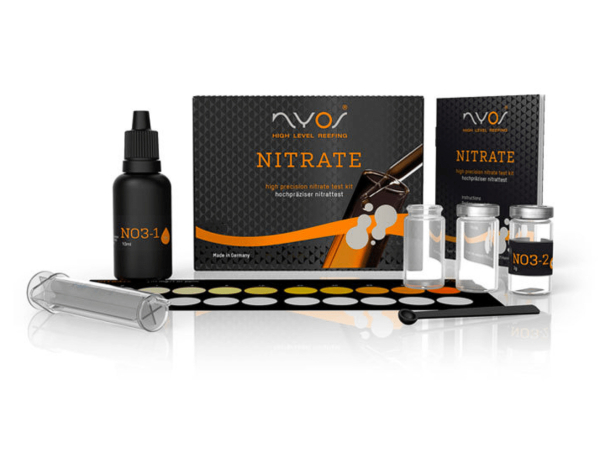
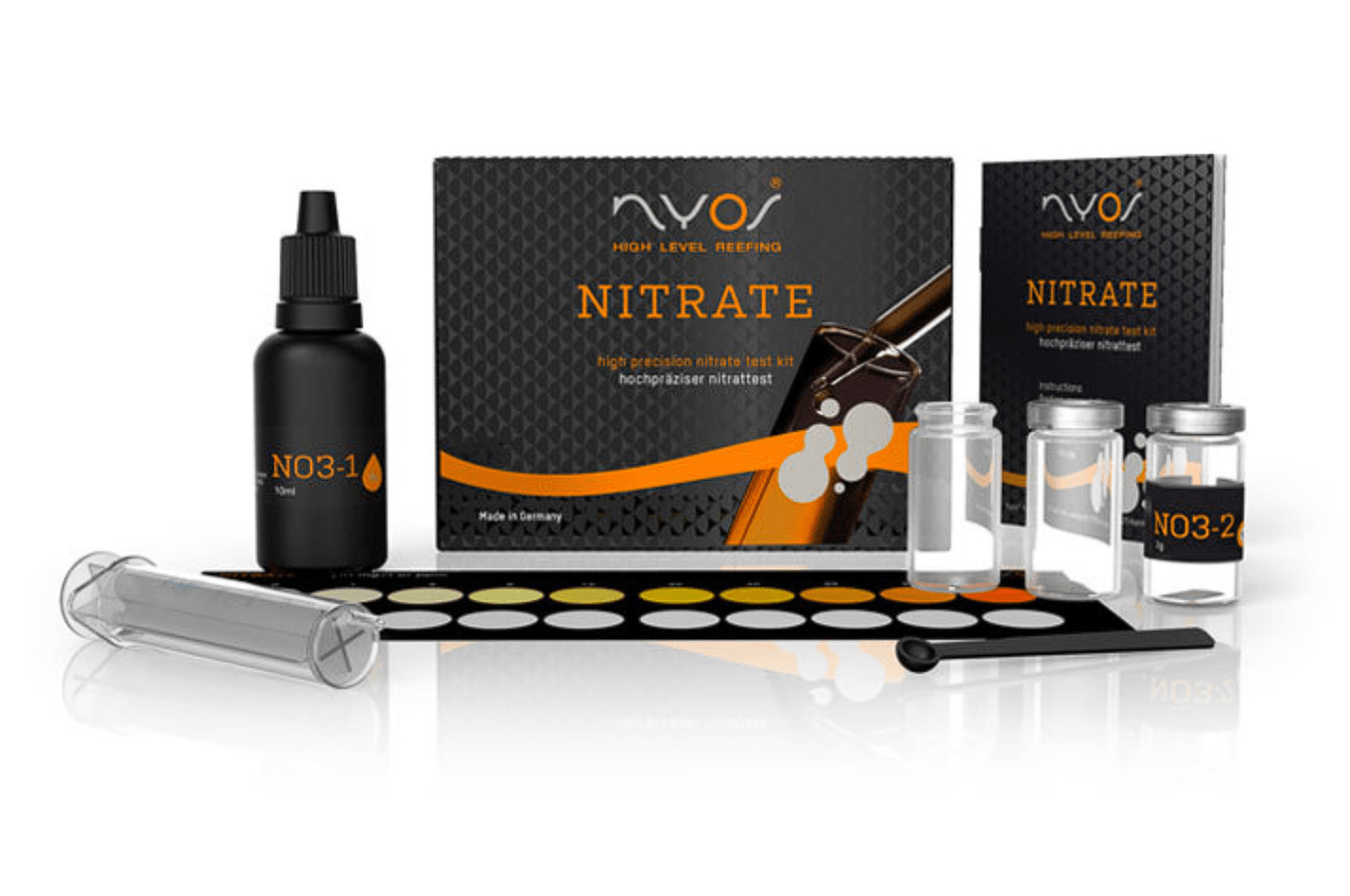



Nyos Nitrate Test Kit is a nitrate test for saltwater with high sensitivity, designed for precise and reproducible measurements in reef aquariums.



| Date Maximum delivery |
|
|---|---|
| Express | Monday 05 October |
| Pick-up point |
Monday 05 October
Wednesday 07 October |
| Home |
Tuesday 06 October
Wednesday 07 October |
| See all delivery fees | Cart amount | Delivery fees |
|---|---|---|
| Colis sur pré-commande | 0 à 158,98 € | 7,80 € |
| 158,99 à 248,98 € | Free | |
| 248,99 à 10 000 € | Free | |
| DPD Livraison en relais Pickup | 0 à 68,98 € | 6,90 € |
| 68,99 à 10 000 € | Free | |
| DPD Livraison sur lieu de travail | 0 à 10 000 € | 7,80 € |
| DPD Livraison à domicile Predict sur créneau horaire | 0 à 68,98 € | 7,80 € |
| 68,99 à 158,98 € | 7,80 € | |
| 158,99 à 10 000 € | Free | |
| En Relais GLS | 0 à 68,98 € | 6,90 € |
| 68,99 à 10 000 € | Free | |
| EXPRESS 24H Vivant - Live - Lebenden - Vivo - Levend | 0 à 248,99 € | 24,90 € |
| 248,99 à 100 000 € | Free | |
| GLS À domicile | 0 à 68,98 € | 7,80 € |
| 68,99 à 158,98 € | 7,80 € | |
| 158,99 à 10 000 € | Free | |
| Livraison palette – Pallet Delivery | 0 à 50 kg | 50 € |
| UPS Matériel Domicile EXPRESS 24H | 0 à 15 000 € | 19,90 € |
| Country | Carrier | Cart amount | Delivery fees |
|---|---|---|---|
| Europe zone 1 | Colis sur pré-commande | 0 à 158,98 € | 15,90 € |
| 158,99 à 248,98 € | 15,90 € | ||
| 248,99 à 10 000 € | Free | ||
| DPD Livraison en relais Pickup | 0 à 68,98 € | 6,90 € | |
| 68,99 à 10 000 € | Free | ||
| DPD Livraison internationale | 0 à 248,98 € | 15,90 € | |
| 248,99 à 10 000 € | Free | ||
| DPD Livraison sur lieu de travail | 0 à 10 000 € | 7,80 € | |
| EXPRESS 24H Vivant - Live - Lebenden - Vivo - Levend | 0 à 248,99 € | 29,89 € | |
| 248,99 à 100 000 € | Free | ||
| Livraison palette – Pallet Delivery | 0 à 50 kg | 259 € | |
| France | Colis sur pré-commande | 0 à 158,98 € | 7,80 € |
| 158,99 à 248,98 € | Free | ||
| 248,99 à 10 000 € | Free | ||
| DPD Livraison en relais Pickup | 0 à 68,98 € | 6,90 € | |
| 68,99 à 10 000 € | Free | ||
| DPD Livraison sur lieu de travail | 0 à 10 000 € | 7,80 € | |
| DPD Livraison à domicile Predict sur créneau horaire | 0 à 68,98 € | 7,80 € | |
| 68,99 à 158,98 € | 7,80 € | ||
| 158,99 à 10 000 € | Free | ||
| En Relais GLS | 0 à 68,98 € | 6,90 € | |
| 68,99 à 10 000 € | Free | ||
| EXPRESS 24H Vivant - Live - Lebenden - Vivo - Levend | 0 à 248,99 € | 24,90 € | |
| 248,99 à 100 000 € | Free | ||
| GLS À domicile | 0 à 68,98 € | 7,80 € | |
| 68,99 à 158,98 € | 7,80 € | ||
| 158,99 à 10 000 € | Free | ||
| Livraison palette – Pallet Delivery | 0 à 50 kg | 50 € | |
| UPS Matériel Domicile EXPRESS 24H | 0 à 15 000 € | 19,90 € | |
| Europe zone 2 | Colis sur pré-commande | 0 à 158,98 € | 39,90 € |
| 158,99 à 248,98 € | 39,90 € | ||
| 248,99 à 10 000 € | 39,90 € | ||
| DPD Livraison en relais Pickup | 0 à 68,98 € | 12,90 € | |
| 68,99 à 10 000 € | 12,90 € | ||
| DPD Livraison internationale | 0 à 248,98 € | 39,90 € | |
| 248,99 à 10 000 € | 39,90 € | ||
| EXPRESS 24H Vivant - Live - Lebenden - Vivo - Levend | 0 à 248,99 € | 39,90 € | |
| 248,99 à 100 000 € | 39,90 € | ||
| Livraison palette – Pallet Delivery | 0 à 50 kg | 359 € | |
| Suisse | Colis sur pré-commande | 0 à 158,98 € | 39,90 € |
| 158,99 à 248,98 € | 39,90 € | ||
| 248,99 à 10 000 € | 39,90 € | ||
| DPD Livraison en relais Pickup | 0 à 68,98 € | 26,90 € | |
| 68,99 à 10 000 € | 26,90 € | ||
| DPD Livraison internationale | 0 à 248,98 € | 39,90 € | |
| 248,99 à 10 000 € | 39,90 € | ||
| Livraison palette – Pallet Delivery | 0 à 50 kg | 389 € | |
| Suisse - EXPRESS 24H Vivant - Live - Lebenden - Vivo – Levend | 0 à 100 000 € | 44,90 € |


Choose the NYOS Reefer Nitrate test to accurately measure the nitrates in your marine aquarium, with comparator and around 40 tests.
The NYOS Reefer Nitrate test is a colorimetric kit specially designed to measure the concentration of nitrates in seawater. Its wide measurement range and precise comparator make it easy to monitor nitrate levels in a marine or reef aquarium.
This nitrate test for marine aquariums uses high-sensitivity reagents, a calibrated color chart, and differentiated color gradations. It therefore makes it easier to compare samples and obtain a readable, reproducible result.
The measurement principle is based on comparing two samples placed in a sliding comparator. One glass contains the reference water, while the second receives the reagents needed to develop the color.
By observing the two glasses from above and moving the comparator on the color chart, the user can find the matching color and directly read the nitrate concentration. Values between two gradations can be estimated.
This system limits the influence of the water’s natural coloration and improves readability compared with a comparison performed with a single sample.
| Product | NYOS Reefer Nitrate test |
|---|---|
| Use | Colorimetric determination of nitrate ions in seawater |
| Measurement range | From 1 to 160 mg/L NO3 |
| Number of tests | Around 40 tests |
| Reading method | Color chart with sliding comparator |
| Type of reagents | NO3-1 liquid reagent and NO3-2 powder reagent |
| Manufacturing | Made in Germany |
The kit was developed to provide accurate measurement while remaining accessible to aquarium hobbyists. It combines sensitive reagents with a simple visual method, suitable for regular monitoring of a marine aquarium.
The NYOS nitrate test offers the following features:
High-sensitivity reagents: they make it possible to detect nitrates over a range from 1 to 160 mg/L.
Calibrated color chart: the different shades are clearly separated to make reading the result easier.
Sliding comparator: it allows simultaneous comparison of the reference sample and the colored sample.
Reproducible results: the calibrated dropper helps dispense consistent drops during successive tests.
Manufacturing control: the reagents are made in Germany in accordance with EN ISO 9001 and are batch tested.
Intuitive use: the different steps are illustrated with pictograms to simplify the test procedure.
1. Rinse the two graduated glasses several times with water from the aquarium.
2. Using the supplied syringe, draw 5 ml of aquarium water and fill each of the two graduated glasses.
3. Add 5 drops of NO3-1 reagent to one of the two glasses. Close the glass with its lid, then shake.
4. Add 1 measuring spoon of NO3-2 reagent to the same glass.
5. Close the glass immediately and shake vigorously for 1 minute.
6. Wait 5 minutes, then remove the lids from both glasses.
7. Place the two glasses in the comparator. Observe the samples from above and move the comparator until the colors match.
8. Read the nitrate concentration in mg/L on the color chart. An intermediate value can be estimated when the color falls between two gradations.
To obtain consistent results, always use the measuring spoon and syringe provided. Follow the exact number of drops, shaking time, and waiting time before reading.
| Included item | Quantity or capacity |
|---|---|
| NO3-1 liquid reagent | 10 ml |
| NO3-2 powder reagent | 2 g |
| Graduated glasses with lid | 2 |
| Measuring spoon | 1 |
| Sliding comparator | 1 |
| Plastic syringe | 5 ml |
| Color comparison chart | 1 |
| Instructions for use | 1 |
After each test, rinse the graduated glasses, lids, syringe, and measuring spoon thoroughly with clean water. Do not clean the accessories with household products that may leave residues and distort future measurements.
Allow the accessories to dry before storing them. Keep the NYOS Reefer Nitrate test in a cool place, at a temperature below 25 °C, away from moisture and direct light.
Close the bottles carefully after use and avoid letting the reagents, caps, or measuring spoon come into contact with aquarium water.
The reagents are intended exclusively for water testing. They must be kept out of reach of children and animals.
NO3-1 reagent may cause a skin allergic reaction. Avoid breathing in the powder reagent dust and use gloves as well as appropriate eye protection.
In case of skin contact, wash the affected area thoroughly with soap and water. If irritation or a rash occurs, consult a healthcare professional.
Used samples can be disposed of with a large amount of tap water into the local wastewater treatment system.
Nyos Nitrate Test Kit is a nitrate test for saltwater with high sensitivity, designed for precise and reproducible measurements in reef aquariums.