- New
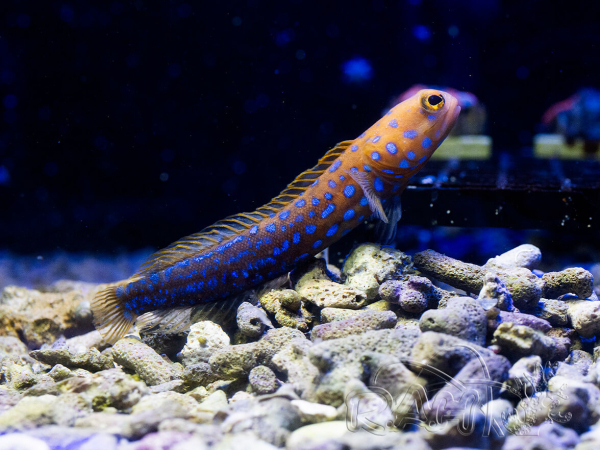
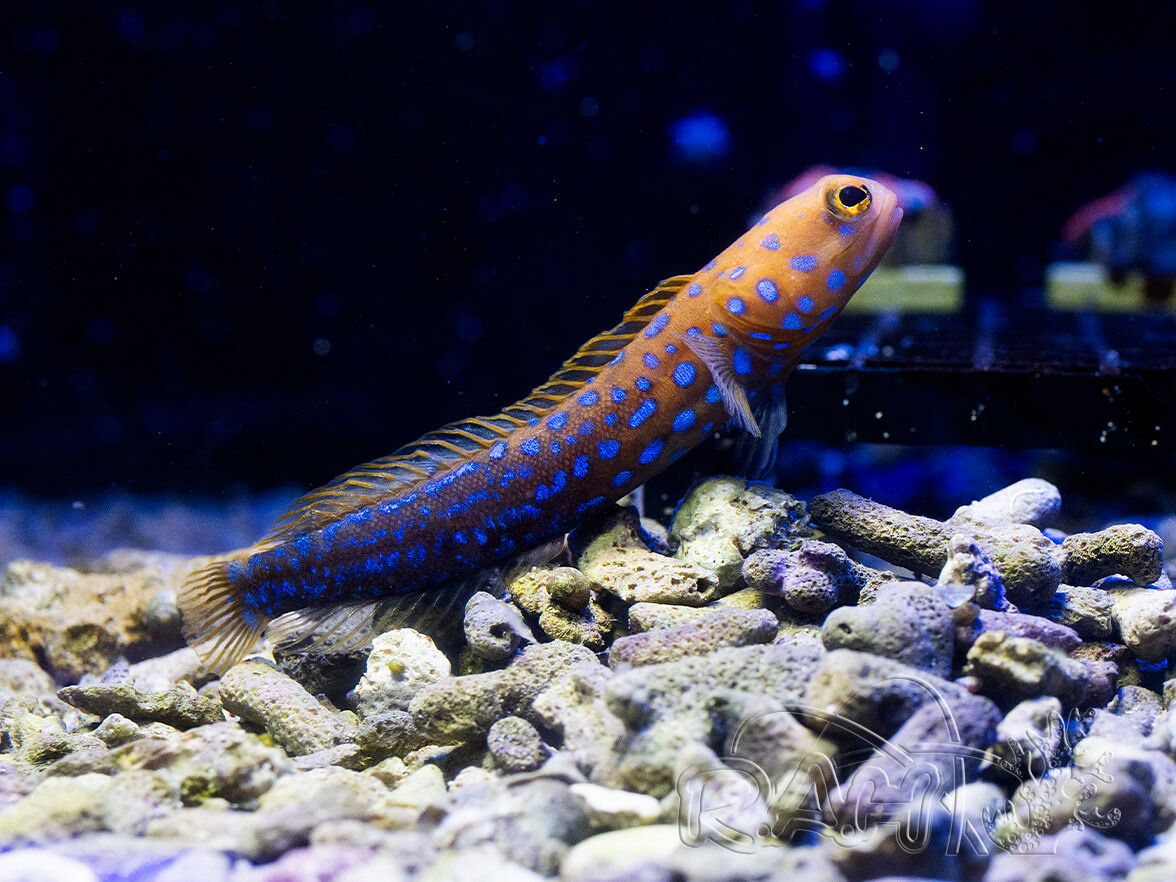
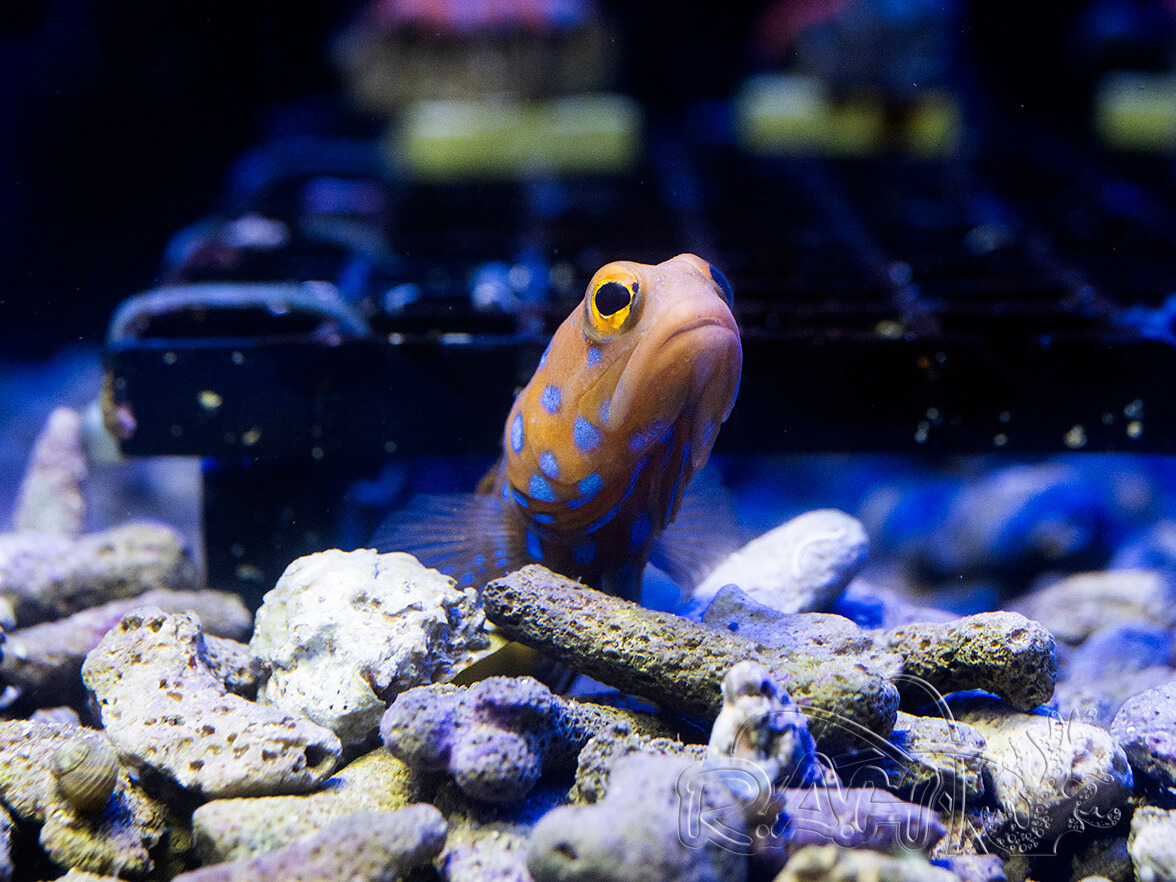



Opistognathus rosenblatti, also called the blue-spotted jawfish, blue-spotted opistognathus, or Blue Spotted Jawfish, is one of the most spectacular bottom-dwelling fish you can observe in a marine aquarium.





| See all delivery fees | Cart amount | Delivery fees |
|---|---|---|
| EXPRESS 24H Vivant - Live - Lebenden - Vivo - Levend | 248,99 à 100 000 € | Free |
| Country | Carrier | Cart amount | Delivery fees |
|---|---|---|---|
| Suisse | Suisse - EXPRESS 24H Vivant - Live - Lebenden - Vivo – Levend | 0 à 100 000 € | 44,90 € |
| Europe zone 1 | EXPRESS 24H Vivant - Live - Lebenden - Vivo - Levend | 248,99 à 100 000 € | Free |
| Europe zone 2 | EXPRESS 24H Vivant - Live - Lebenden - Vivo - Levend | 248,99 à 100 000 € | 39,90 € |
| France | EXPRESS 24H Vivant - Live - Lebenden - Vivo - Levend | 248,99 à 100 000 € | Free |
You might also like



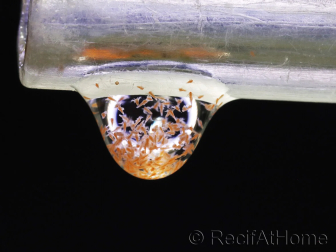
Opistognathus rosenblatti, also known as the blue-spotted jawfish or Blue Spotted Jawfish, is one of the most spectacular bottom-dwelling fish you can observe in a marine aquarium. Native to the Gulf of California, also called the Sea of Cortez, it stands out for its highly distinctive coloration and burrow-building behavior.
Its dark brown to nearly black body is covered with many bright electric-blue spots. The head usually shows lighter shades, ranging from yellow to orange-brown. Its coloration can change depending on the animal’s age, sex, and behavior. Males may in particular display a very different coloration during courtship.
This species generally reaches about 10 cm as an adult. Despite its relatively modest size, it requires a specially arranged aquarium in order to properly express its natural behavior.
Opistognathus rosenblatti spends much of its time right next to its burrow. It digs a tunnel in the substrate and then uses sand, small pieces of rock, shells, or coral fragments to reinforce the walls and shape the entrance.
Its construction behavior is especially interesting to watch. The fish may move pieces of the décor one by one, select certain fragments, and regularly reorganize the entrance to its home. In the wild, it may also close the entrance to its burrow at nightfall and reopen it the next morning.
Once settled, it often remains with only its head or upper body visible above the burrow, ready to seize small prey passing nearby.
Unlike many reef fish, substrate quality is a key factor in properly keeping Opistognathus rosenblatti. A sand layer of at least 10 cm is recommended, with ideally some deeper areas reaching 15 cm or more.
The substrate can consist of a mix of fine to medium sand along with small pieces of rock, shells, or coral fragments. This varied grain size allows the fish to build a stable tunnel similar to what it would create in its natural environment.
It is also important that the main rocks in the aquascape are perfectly stable and rest on a solid base. Since the fish may dig deeply under stones, décor simply placed on top of the sand could become unstable.
Temperature is one of the main особенities of Opistognathus rosenblatti. This species comes from the relatively cool waters of the Gulf of California and should not be considered a classic tropical reef fish.
A temperature ideally around 21 to 24 °C is recommended for long-term care. High temperatures should be avoided over extended periods. In a warm room or during summer, a chiller may therefore become necessary to maintain a suitable and stable temperature.
This characteristic must absolutely be taken into account before purchase, especially when the fish is intended for a reef aquarium containing species usually kept at 25 or 26 °C.
Recommended minimum volume: about 200 liters for one individual, with a large footprint.
Adult size: about 10 cm.
Recommended temperature: ideally 21 to 24 °C.
pH: about 8.1 to 8.4.
Specific gravity: about 1.023 to 1.025.
Substrate: fine to medium sand supplemented with small elements of different grain sizes.
Recommended sand depth: at least 10 cm, ideally 10 to 15 cm or more in the area intended for the burrow.
Water movement: moderate near the bottom, while avoiding a strong current directed straight at the burrow entrance.
Opistognathus rosenblatti is an excellent jumper. An open-top aquarium therefore poses a significant risk, especially when the fish is introduced, at night, or when it is startled.
It is strongly recommended to use a cover or net specifically designed for marine aquariums. Openings around cables, hoses, and equipment should also be secured, as a relatively small gap may be enough for the fish to escape the aquarium.
Opistognathus rosenblatti is generally peaceful toward other fish. However, it is territorial around its burrow and must have enough space on the bottom.
It is best paired with calm fish that will not constantly try to enter its territory or take all of its food. Particularly aggressive, very active, or highly competitive fish at feeding time are not recommended.
Several individuals can naturally live near one another, but keeping them in a group requires a much larger aquarium with a substantial sand area. Each individual must be able to build its own burrow while maintaining sufficient distance from its tankmates.
This species is considered reef-safe and normally does not attack corals. Its activity is mainly concentrated around the substrate and its burrow.
Opistognathus rosenblatti is mainly carnivorous and naturally feeds on small planktonic organisms and invertebrates passing near its burrow.
In an aquarium, it can be fed brine shrimp, mysis, copepods, finely chopped krill, as well as various frozen foods suitable for carnivorous marine fish. Some individuals also gradually accept small pellets.
Feeding should be done in a way that some of the food reaches the vicinity of its territory. A newly introduced individual may hesitate to leave its burrow to compete with other fish.
Several small feedings may be preferable to a single large one, especially during the first few weeks of acclimation.
The ideal setup is based on a large sandy area combined with a few perfectly stabilized rocky zones. Adding small rock fragments, empty shells, and pieces of substrate of different sizes gives the fish plenty of material to build its burrow.
It is best to keep the bottom area relatively calm. Excessive water movement can constantly shift the sand and prevent the fish from properly stabilizing the entrance to its tunnel.
When it arrives in a new aquarium, the fish may remain hidden for some time before finally choosing the location of its burrow. It may also move and rebuild its home several times before finding a suitable spot.
Opistognathus rosenblatti is sought after both for its exceptional coloration and for its behavior. Its electric-blue spots create a spectacular contrast with its dark body, while its constant activity around its burrow makes it a particularly interesting fish to observe.
It is especially suited to aquarists who want to observe natural behaviors rather than a fish that swims continuously in open water. Construction, moving stones, territory surveillance, and burrow sealing are all part of its daily routine.
However, its care requires more preparation than that of Opistognathus aurifrons. A deep substrate, relatively cool temperature, ample floor space, and a fully covered aquarium are essential to provide it with good living conditions.
With its many electric-blue spots and its true builder behavior, Opistognathus rosenblatti is an iconic jawfish species. Well established in a suitable aquarium, it provides a constant spectacle around its burrow and quickly develops a characteristic behavior that is easy to observe.
It is, however, intended for an aquarist capable of providing an aquarium designed around its needs: deep substrate, peaceful environment, suitable food, and above all a cooler temperature than that of many classic tropical reef aquariums.
Opistognathus rosenblatti, also called the blue-spotted jawfish, blue-spotted opistognathus, or Blue Spotted Jawfish, is one of the most spectacular bottom-dwelling fish you can observe in a marine aquarium.