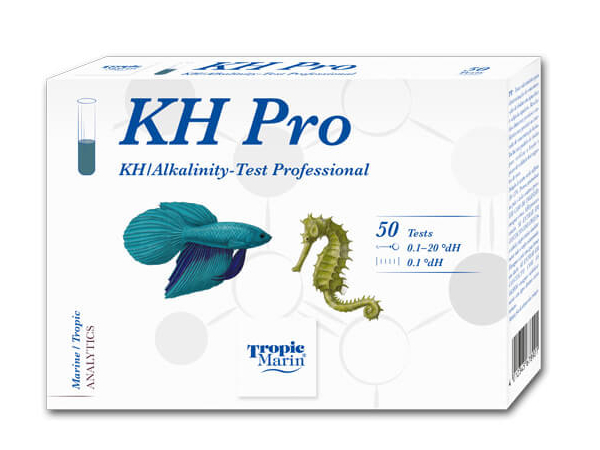



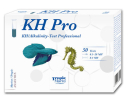
Tropic Marin KH Test for freshwater and saltwater aquariums, allowing a simple and reliable measurement of carbonate hardness to stabilize pH and biological balance.




| Date Maximum delivery |
|
|---|---|
| Express | Thursday 01 October |
| Pick-up point |
Thursday 01 October
Monday 05 October |
| Home |
Friday 02 October
Monday 05 October |
| See all delivery fees | Cart amount | Delivery fees |
|---|---|---|
| Colis sur pré-commande | 0 à 158,98 € | 7,80 € |
| 158,99 à 248,98 € | Free | |
| 248,99 à 10 000 € | Free | |
| DPD Livraison en relais Pickup | 0 à 68,98 € | 6,90 € |
| 68,99 à 10 000 € | Free | |
| DPD Livraison sur lieu de travail | 0 à 10 000 € | 7,80 € |
| DPD Livraison à domicile Predict sur créneau horaire | 0 à 68,98 € | 7,80 € |
| 68,99 à 158,98 € | 7,80 € | |
| 158,99 à 10 000 € | Free | |
| En Relais GLS | 0 à 68,98 € | 6,90 € |
| 68,99 à 10 000 € | Free | |
| EXPRESS 24H Vivant - Live - Lebenden - Vivo - Levend | 0 à 248,99 € | 24,90 € |
| 248,99 à 100 000 € | Free | |
| GLS À domicile | 0 à 68,98 € | 7,80 € |
| 68,99 à 158,98 € | 7,80 € | |
| 158,99 à 10 000 € | Free | |
| Livraison palette – Pallet Delivery | 0 à 50 kg | 50 € |
| UPS Matériel Domicile EXPRESS 24H | 0 à 15 000 € | 19,90 € |
| Country | Carrier | Cart amount | Delivery fees |
|---|---|---|---|
| Europe zone 1 | Colis sur pré-commande | 0 à 158,98 € | 15,90 € |
| 158,99 à 248,98 € | 15,90 € | ||
| 248,99 à 10 000 € | Free | ||
| DPD Livraison en relais Pickup | 0 à 68,98 € | 6,90 € | |
| 68,99 à 10 000 € | Free | ||
| DPD Livraison internationale | 0 à 248,98 € | 15,90 € | |
| 248,99 à 10 000 € | Free | ||
| DPD Livraison sur lieu de travail | 0 à 10 000 € | 7,80 € | |
| EXPRESS 24H Vivant - Live - Lebenden - Vivo - Levend | 0 à 248,99 € | 29,89 € | |
| 248,99 à 100 000 € | Free | ||
| Livraison palette – Pallet Delivery | 0 à 50 kg | 259 € | |
| France | Colis sur pré-commande | 0 à 158,98 € | 7,80 € |
| 158,99 à 248,98 € | Free | ||
| 248,99 à 10 000 € | Free | ||
| DPD Livraison en relais Pickup | 0 à 68,98 € | 6,90 € | |
| 68,99 à 10 000 € | Free | ||
| DPD Livraison sur lieu de travail | 0 à 10 000 € | 7,80 € | |
| DPD Livraison à domicile Predict sur créneau horaire | 0 à 68,98 € | 7,80 € | |
| 68,99 à 158,98 € | 7,80 € | ||
| 158,99 à 10 000 € | Free | ||
| En Relais GLS | 0 à 68,98 € | 6,90 € | |
| 68,99 à 10 000 € | Free | ||
| EXPRESS 24H Vivant - Live - Lebenden - Vivo - Levend | 0 à 248,99 € | 24,90 € | |
| 248,99 à 100 000 € | Free | ||
| GLS À domicile | 0 à 68,98 € | 7,80 € | |
| 68,99 à 158,98 € | 7,80 € | ||
| 158,99 à 10 000 € | Free | ||
| Livraison palette – Pallet Delivery | 0 à 50 kg | 50 € | |
| UPS Matériel Domicile EXPRESS 24H | 0 à 15 000 € | 19,90 € | |
| Europe zone 2 | Colis sur pré-commande | 0 à 158,98 € | 39,90 € |
| 158,99 à 248,98 € | 39,90 € | ||
| 248,99 à 10 000 € | 39,90 € | ||
| DPD Livraison en relais Pickup | 0 à 68,98 € | 12,90 € | |
| 68,99 à 10 000 € | 12,90 € | ||
| DPD Livraison internationale | 0 à 248,98 € | 39,90 € | |
| 248,99 à 10 000 € | 39,90 € | ||
| EXPRESS 24H Vivant - Live - Lebenden - Vivo - Levend | 0 à 248,99 € | 39,90 € | |
| 248,99 à 100 000 € | 39,90 € | ||
| Livraison palette – Pallet Delivery | 0 à 50 kg | 359 € | |
| Suisse | Colis sur pré-commande | 0 à 158,98 € | 39,90 € |
| 158,99 à 248,98 € | 39,90 € | ||
| 248,99 à 10 000 € | 39,90 € | ||
| DPD Livraison en relais Pickup | 0 à 68,98 € | 26,90 € | |
| 68,99 à 10 000 € | 26,90 € | ||
| DPD Livraison internationale | 0 à 248,98 € | 39,90 € | |
| 248,99 à 10 000 € | 39,90 € | ||
| Livraison palette – Pallet Delivery | 0 à 50 kg | 389 € | |
| Suisse - EXPRESS 24H Vivant - Live - Lebenden - Vivo – Levend | 0 à 100 000 € | 44,90 € |
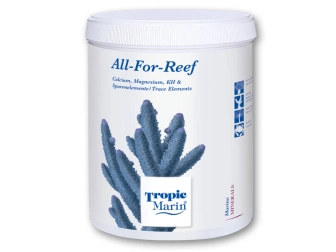

The KH Test Tropic Marin allows measuring carbonate hardness, also known as alkalinity, in freshwater and saltwater aquariums. This value corresponds to the water's buffering capacity, essential for maintaining a stable pH.
| Parameter | Value |
|---|---|
| Measurement Range | 1 to 20 °dH |
| Measurement Accuracy | 0.5 / 1 °dH |
The carbonate hardness or alkalinity of a water sample refers to its buffering capacity, i.e., the water's ability to maintain a stable pH value. In aquaristics, the term carbonate hardness is commonly used, although the measurement concerns alkalinity. In this test, the two concepts are considered synonymous.
Carbonate hardness must be checked very regularly in all aquariums. Too low alkalinity can lead to a dangerous pH drop for fish and invertebrates. In coral aquariums, sufficient carbonate hardness is essential to ensure proper growth of corals. Conversely, too high alkalinity in saltwater aquariums can cause calcium deposits and harm coral growth.
In saltwater aquariums, carbonate hardness should be between 6 and 9 °dH. In freshwater aquariums, it should not be lower than 3 °dH. The optimal value depends on the species of fish and plants kept.
| KH Reagent | 25 ml |
| Glass Cuvette | 10 ml |
| Dosing Syringe | 5 ml |
| User Manual | Included |
The measurement is performed by adding the KH reagent drop by drop into a water sample until the color changes from turquoise to pink. The number of drops needed directly corresponds to the carbonate hardness expressed in degrees of German hardness.
To increase accuracy, a larger sample volume can be used. In this case, each drop represents half a unit of carbonate hardness.
The reagents are usable for 6 months after opening. They should be stored in a dark and cool place to ensure the reliability of the results.
Regular KH control contributes to pH stability and the biological balance of the aquarium.
Tropic Marin KH Test for freshwater and saltwater aquariums, allowing a simple and reliable measurement of carbonate hardness to stabilize pH and biological balance.