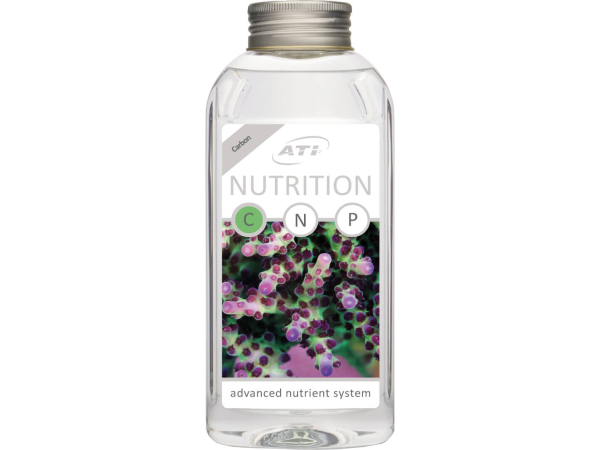
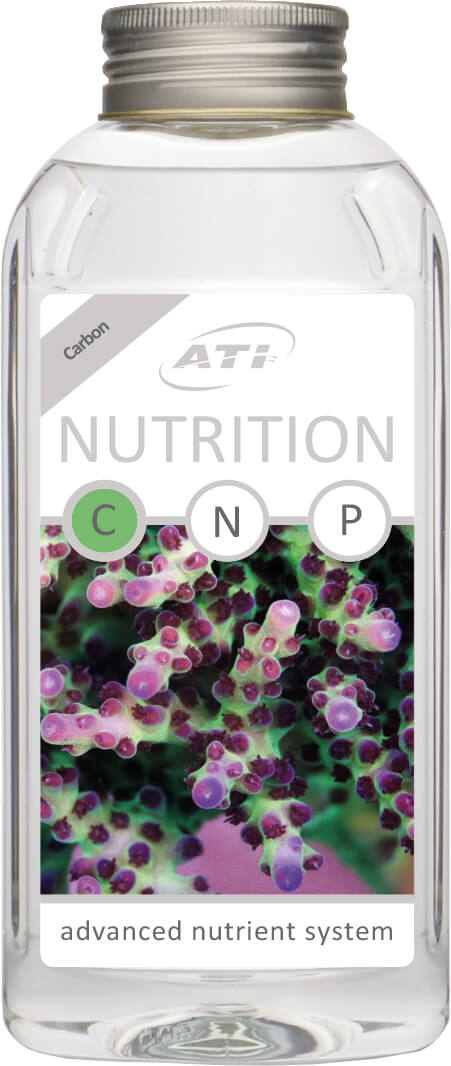



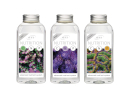
ATI Nutrition C 500 ml is a CNP nutritional solution providing organic carbon and essential compounds, allowing for the balancing of nutrients according to the Redfield ratio for a stable, vibrant, and intensely colored reef.





| Date Maximum delivery |
|
|---|---|
| Express | Monday 05 October |
| Pick-up point |
Monday 05 October
Wednesday 07 October |
| Home |
Tuesday 06 October
Wednesday 07 October |
| See all delivery fees | Cart amount | Delivery fees |
|---|---|---|
| Colis sur pré-commande | 0 à 158,98 € | 7,80 € |
| 158,99 à 248,98 € | Free | |
| 248,99 à 10 000 € | Free | |
| DPD Livraison en relais Pickup | 0 à 68,98 € | 6,90 € |
| 68,99 à 10 000 € | Free | |
| DPD Livraison sur lieu de travail | 0 à 10 000 € | 7,80 € |
| DPD Livraison à domicile Predict sur créneau horaire | 0 à 68,98 € | 7,80 € |
| 68,99 à 158,98 € | 7,80 € | |
| 158,99 à 10 000 € | Free | |
| En Relais GLS | 0 à 68,98 € | 6,90 € |
| 68,99 à 10 000 € | Free | |
| EXPRESS 24H Vivant - Live - Lebenden - Vivo - Levend | 0 à 248,99 € | 24,90 € |
| 248,99 à 100 000 € | Free | |
| GLS À domicile | 0 à 68,98 € | 7,80 € |
| 68,99 à 158,98 € | 7,80 € | |
| 158,99 à 10 000 € | Free | |
| Livraison palette – Pallet Delivery | 0 à 50 kg | 50 € |
| UPS Matériel Domicile EXPRESS 24H | 0 à 15 000 € | 19,90 € |
| Country | Carrier | Cart amount | Delivery fees |
|---|---|---|---|
| Europe zone 1 | Colis sur pré-commande | 0 à 158,98 € | 15,90 € |
| 158,99 à 248,98 € | 15,90 € | ||
| 248,99 à 10 000 € | Free | ||
| DPD Livraison en relais Pickup | 0 à 68,98 € | 6,90 € | |
| 68,99 à 10 000 € | Free | ||
| DPD Livraison internationale | 0 à 248,98 € | 15,90 € | |
| 248,99 à 10 000 € | Free | ||
| DPD Livraison sur lieu de travail | 0 à 10 000 € | 7,80 € | |
| EXPRESS 24H Vivant - Live - Lebenden - Vivo - Levend | 0 à 248,99 € | 29,89 € | |
| 248,99 à 100 000 € | Free | ||
| Livraison palette – Pallet Delivery | 0 à 50 kg | 259 € | |
| France | Colis sur pré-commande | 0 à 158,98 € | 7,80 € |
| 158,99 à 248,98 € | Free | ||
| 248,99 à 10 000 € | Free | ||
| DPD Livraison en relais Pickup | 0 à 68,98 € | 6,90 € | |
| 68,99 à 10 000 € | Free | ||
| DPD Livraison sur lieu de travail | 0 à 10 000 € | 7,80 € | |
| DPD Livraison à domicile Predict sur créneau horaire | 0 à 68,98 € | 7,80 € | |
| 68,99 à 158,98 € | 7,80 € | ||
| 158,99 à 10 000 € | Free | ||
| En Relais GLS | 0 à 68,98 € | 6,90 € | |
| 68,99 à 10 000 € | Free | ||
| EXPRESS 24H Vivant - Live - Lebenden - Vivo - Levend | 0 à 248,99 € | 24,90 € | |
| 248,99 à 100 000 € | Free | ||
| GLS À domicile | 0 à 68,98 € | 7,80 € | |
| 68,99 à 158,98 € | 7,80 € | ||
| 158,99 à 10 000 € | Free | ||
| Livraison palette – Pallet Delivery | 0 à 50 kg | 50 € | |
| UPS Matériel Domicile EXPRESS 24H | 0 à 15 000 € | 19,90 € | |
| Europe zone 2 | Colis sur pré-commande | 0 à 158,98 € | 39,90 € |
| 158,99 à 248,98 € | 39,90 € | ||
| 248,99 à 10 000 € | 39,90 € | ||
| DPD Livraison en relais Pickup | 0 à 68,98 € | 12,90 € | |
| 68,99 à 10 000 € | 12,90 € | ||
| DPD Livraison internationale | 0 à 248,98 € | 39,90 € | |
| 248,99 à 10 000 € | 39,90 € | ||
| EXPRESS 24H Vivant - Live - Lebenden - Vivo - Levend | 0 à 248,99 € | 39,90 € | |
| 248,99 à 100 000 € | 39,90 € | ||
| Livraison palette – Pallet Delivery | 0 à 50 kg | 359 € | |
| Suisse | Colis sur pré-commande | 0 à 158,98 € | 39,90 € |
| 158,99 à 248,98 € | 39,90 € | ||
| 248,99 à 10 000 € | 39,90 € | ||
| DPD Livraison en relais Pickup | 0 à 68,98 € | 26,90 € | |
| 68,99 à 10 000 € | 26,90 € | ||
| DPD Livraison internationale | 0 à 248,98 € | 39,90 € | |
| 248,99 à 10 000 € | 39,90 € | ||
| Livraison palette – Pallet Delivery | 0 à 50 kg | 389 € | |
| Suisse - EXPRESS 24H Vivant - Live - Lebenden - Vivo – Levend | 0 à 100 000 € | 44,90 € |
You might also like

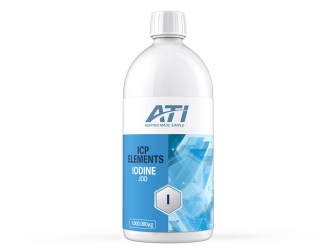
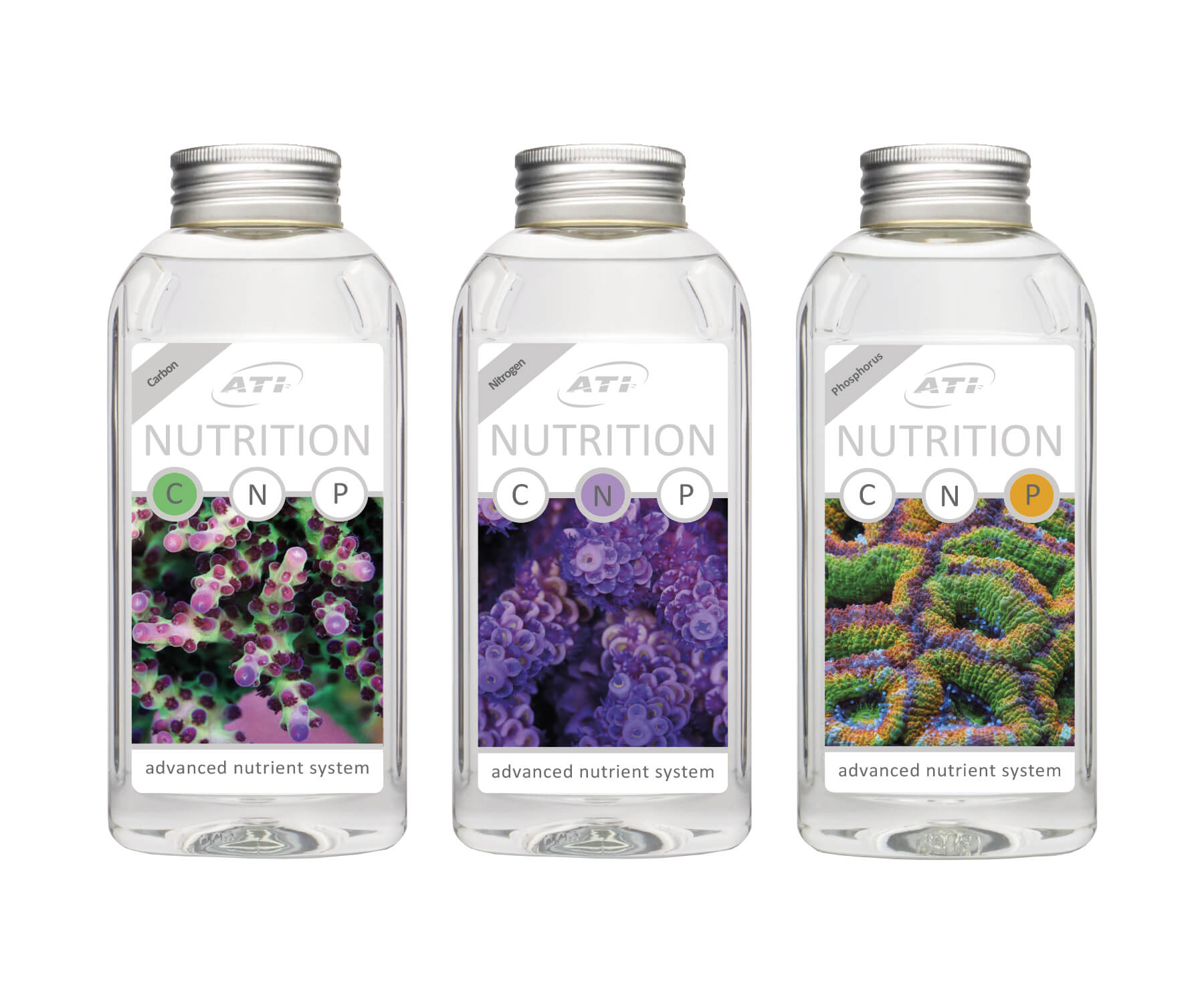
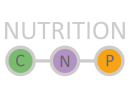
ATI Nutrition C is part of the Nutrition CNP system developed by ATI to ensure a controlled supply of organic compounds and essential nutrients in reef aquariums.
For skeleton formation, corals need calcium, carbonate, magnesium, strontium, and barium. For biomass construction, they also require trace elements, organic compounds, and fundamental nutrients such as carbon (C), nitrogen (N), and phosphorus (P).
Carbon is a fundamental element of all living cells. It is part of the composition of proteins, fats, and DNA, and serves as the basis for energy production and biological building materials.
Controlled carbon supply promotes biological activity, supports coral tissue growth, and contributes to the overall stability of the reef ecosystem.
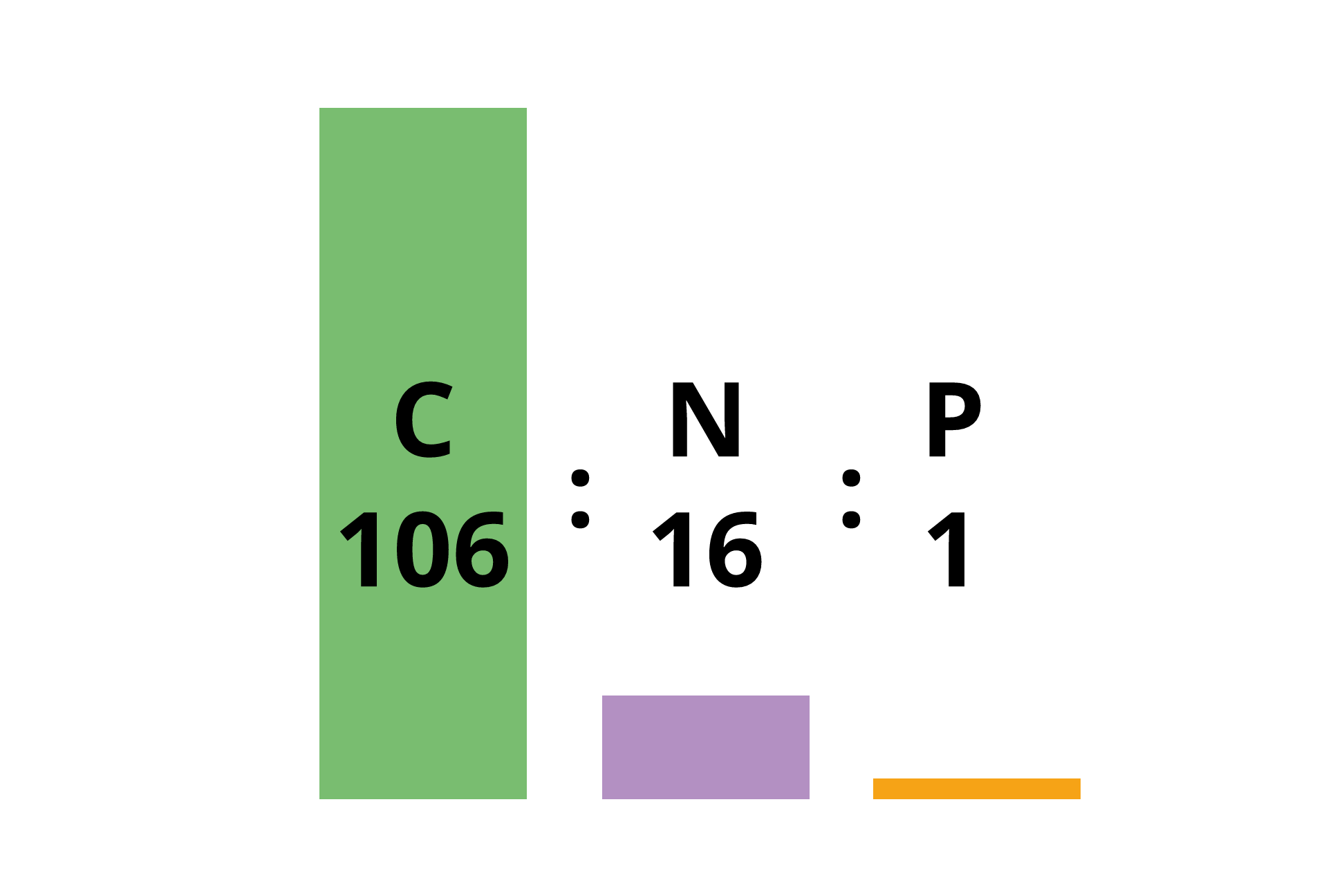
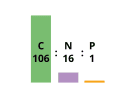
The carbon, nitrogen, and phosphorus ratio is called the C:N:P ratio. The most well-known is the Redfield ratio, derived from the study of phytoplankton, which indicates an average need of 106 parts carbon, 16 parts nitrogen, and 1 part phosphorus.
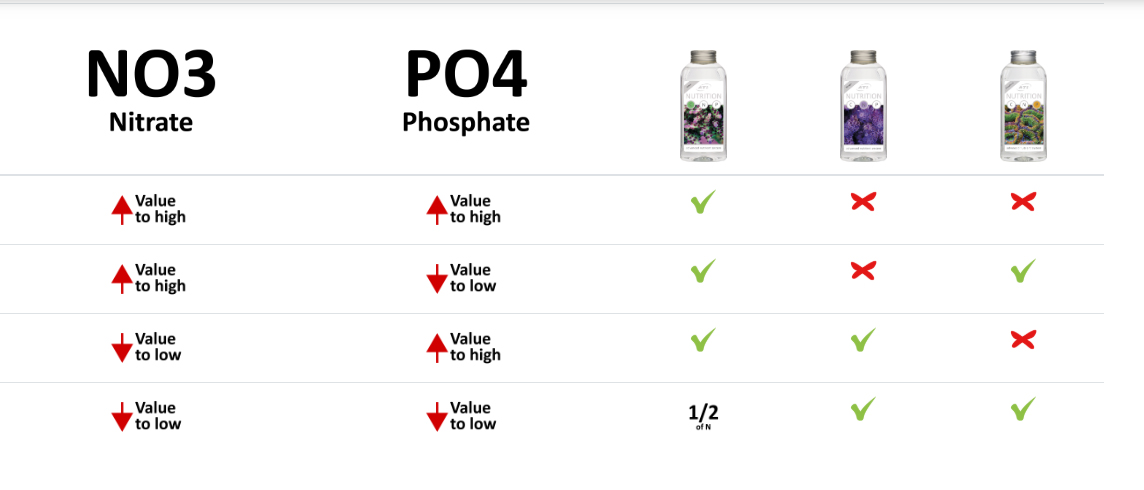
If one of these elements becomes limiting, biological growth slows down and nitrates and/or phosphates can accumulate in the water. ATI Nutrition C helps prevent these imbalances by providing the necessary carbon in a targeted manner.
Every living organism is composed of cells made of proteins, fats, and DNA. The elements carbon, nitrogen, and phosphorus are essential for the formation of these structures.
Nutrition C, N, and P solutions contain many vital active substances that can be used by reef inhabitants for energy production and construction materials. This results in increased growth and intensely colored corals.
The different nutrients must be intelligently combined based on the current nutritional situation of the aquarium and dosed according to the actual demand of the reef tank.
Professional nutrient management with Nutrition C, N, and P promotes coral growth, vitality, and coloration. It also supports the development of a healthy and biodiversity-rich ecosystem, where algae and cyanobacteria find it more difficult to establish.
Utilisé avec le calculateur ATI permet de stabiliser les nutriments à des valeurs correctes
ATI Nutrition C 500 ml is a CNP nutritional solution providing organic carbon and essential compounds, allowing for the balancing of nutrients according to the Redfield ratio for a stable, vibrant, and intensely colored reef.