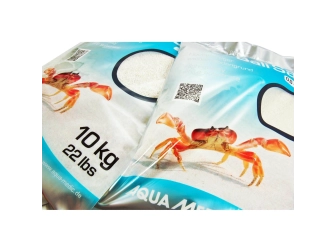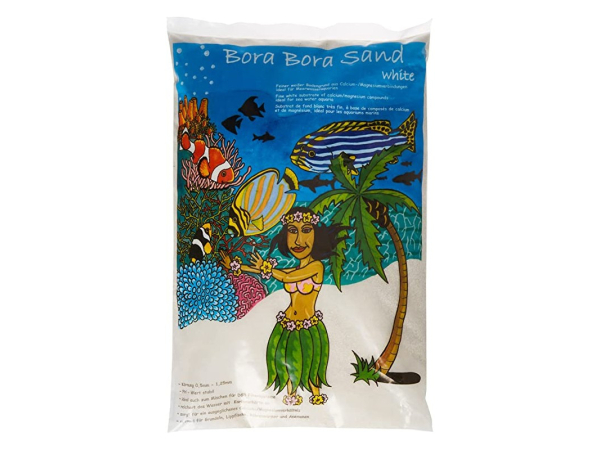



Very fine white base sand for marine aquariums, composed largely of calcium and magnesium. Recommended layer 2 to 3 cm, rinse under running water before use.





| Date Maximum delivery |
|
|---|---|
| Express | Monday 05 October |
| Pick-up point |
Monday 05 October
Wednesday 07 October |
| Home |
Tuesday 06 October
Wednesday 07 October |
| See all delivery fees | Cart amount | Delivery fees |
|---|---|---|
| Colis sur pré-commande | 0 à 158,98 € | 7,80 € |
| 158,99 à 248,98 € | Free | |
| 248,99 à 10 000 € | Free | |
| DPD Livraison en relais Pickup | 0 à 68,98 € | 6,90 € |
| 68,99 à 10 000 € | Free | |
| DPD Livraison sur lieu de travail | 0 à 10 000 € | 7,80 € |
| DPD Livraison à domicile Predict sur créneau horaire | 0 à 68,98 € | 7,80 € |
| 68,99 à 158,98 € | 7,80 € | |
| 158,99 à 10 000 € | Free | |
| En Relais GLS | 0 à 68,98 € | 6,90 € |
| 68,99 à 10 000 € | Free | |
| EXPRESS 24H Vivant - Live - Lebenden - Vivo - Levend | 0 à 248,99 € | 24,90 € |
| 248,99 à 100 000 € | Free | |
| GLS À domicile | 0 à 68,98 € | 7,80 € |
| 68,99 à 158,98 € | 7,80 € | |
| 158,99 à 10 000 € | Free | |
| Livraison palette – Pallet Delivery | 0 à 50 kg | 50 € |
| UPS Matériel Domicile EXPRESS 24H | 0 à 15 000 € | 19,90 € |
| Country | Carrier | Cart amount | Delivery fees |
|---|---|---|---|
| Europe zone 1 | Colis sur pré-commande | 0 à 158,98 € | 15,90 € |
| 158,99 à 248,98 € | 15,90 € | ||
| 248,99 à 10 000 € | Free | ||
| DPD Livraison en relais Pickup | 0 à 68,98 € | 6,90 € | |
| 68,99 à 10 000 € | Free | ||
| DPD Livraison internationale | 0 à 248,98 € | 15,90 € | |
| 248,99 à 10 000 € | Free | ||
| DPD Livraison sur lieu de travail | 0 à 10 000 € | 7,80 € | |
| EXPRESS 24H Vivant - Live - Lebenden - Vivo - Levend | 0 à 248,99 € | 29,89 € | |
| 248,99 à 100 000 € | Free | ||
| Livraison palette – Pallet Delivery | 0 à 50 kg | 259 € | |
| France | Colis sur pré-commande | 0 à 158,98 € | 7,80 € |
| 158,99 à 248,98 € | Free | ||
| 248,99 à 10 000 € | Free | ||
| DPD Livraison en relais Pickup | 0 à 68,98 € | 6,90 € | |
| 68,99 à 10 000 € | Free | ||
| DPD Livraison sur lieu de travail | 0 à 10 000 € | 7,80 € | |
| DPD Livraison à domicile Predict sur créneau horaire | 0 à 68,98 € | 7,80 € | |
| 68,99 à 158,98 € | 7,80 € | ||
| 158,99 à 10 000 € | Free | ||
| En Relais GLS | 0 à 68,98 € | 6,90 € | |
| 68,99 à 10 000 € | Free | ||
| EXPRESS 24H Vivant - Live - Lebenden - Vivo - Levend | 0 à 248,99 € | 24,90 € | |
| 248,99 à 100 000 € | Free | ||
| GLS À domicile | 0 à 68,98 € | 7,80 € | |
| 68,99 à 158,98 € | 7,80 € | ||
| 158,99 à 10 000 € | Free | ||
| Livraison palette – Pallet Delivery | 0 à 50 kg | 50 € | |
| UPS Matériel Domicile EXPRESS 24H | 0 à 15 000 € | 19,90 € | |
| Europe zone 2 | Colis sur pré-commande | 0 à 158,98 € | 39,90 € |
| 158,99 à 248,98 € | 39,90 € | ||
| 248,99 à 10 000 € | 39,90 € | ||
| DPD Livraison en relais Pickup | 0 à 68,98 € | 12,90 € | |
| 68,99 à 10 000 € | 12,90 € | ||
| DPD Livraison internationale | 0 à 248,98 € | 39,90 € | |
| 248,99 à 10 000 € | 39,90 € | ||
| EXPRESS 24H Vivant - Live - Lebenden - Vivo - Levend | 0 à 248,99 € | 39,90 € | |
| 248,99 à 100 000 € | 39,90 € | ||
| Livraison palette – Pallet Delivery | 0 à 50 kg | 359 € | |
| Suisse | Colis sur pré-commande | 0 à 158,98 € | 39,90 € |
| 158,99 à 248,98 € | 39,90 € | ||
| 248,99 à 10 000 € | 39,90 € | ||
| DPD Livraison en relais Pickup | 0 à 68,98 € | 26,90 € | |
| 68,99 à 10 000 € | 26,90 € | ||
| DPD Livraison internationale | 0 à 248,98 € | 39,90 € | |
| 248,99 à 10 000 € | 39,90 € | ||
| Livraison palette – Pallet Delivery | 0 à 50 kg | 389 € | |
| Suisse - EXPRESS 24H Vivant - Live - Lebenden - Vivo – Levend | 0 à 100 000 € | 44,90 € |
You might also like
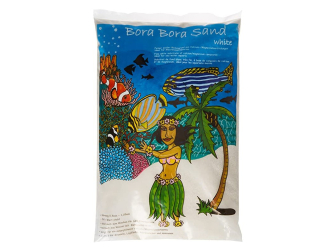
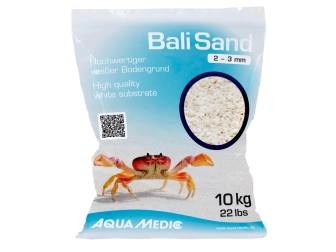
This sand is a very fine, white substrate, based on calcium and magnesium compounds, indicated as ideal for marine aquariums.
A layer of 2 to 3 cm is recommended so that a sufficiently strong current can clear it of debris and prevent any concentration of nitrates at the bottom.
Bora Bora sand is indicated as optimal for mixing with live sand filtration systems (DSB method). In this case, the substrate should be at least 8 to 20 cm high.
Made from very pure rock, Bora Bora sand is indicated as not releasing nitrates, phosphates, or silicates.
It is indicated as largely composed of calcium and magnesium and as supplementing the water with calcium and magnesium carbonates and bicarbonates (measured by the TAC or KH).
It is indicated that approximately one year later, Bora Bora sand should be added at a rate of about 10% of the quantity present in the tank, corresponding to the volume dissolved over the year in the form of calcium, magnesium, carbonates, and bicarbonates.
The fineness of the sand is indicated as appreciated by mollusks, anemones, cerianthids, serpulids, feather duster worms, as well as by wrasses that burrow in it. Gobiodons (family of gobies) are also cited as easily digging into it.
Given example: for an aquarium 150 cm long, 50 cm deep, with 2 cm substrate height: 150 × 50 × 2 = 15 L.
Given indication: 8 kg of Bora Bora sand is suitable for 5 liters.
Before any use, it is indicated to rinse Bora Bora sand with running water. The water may become milky at first; continue rinsing until it becomes approximately clear.
| Product | PREIS Bora Bora Sand |
|---|---|
| Weight | 3 kg |
| Type | Sand / substrate |
| Color / Granulometry | White, very fine |
| Usage | Marine aquariums |
| Recommended Thickness | 2 to 3 cm |
| DSB (indication) | 8 to 20 cm substrate height |
| Rinsing | Rinse with running water before use, until water is approximately clear |
Sable introduit après 3 mois du démarrage,pour éviter tous les déchets du cycle de l’azote et les sédiments des pierres.Donne un aspect très esthétique et rajoute de la luminosité pour les coraux,bien penser à le rincer avant introduction dans le bac,les escargots et l’ophiocoma que j’ai acheté ensuite se chargent de l’entretenir.
Very fine white base sand for marine aquariums, composed largely of calcium and magnesium. Recommended layer 2 to 3 cm, rinse under running water before use.