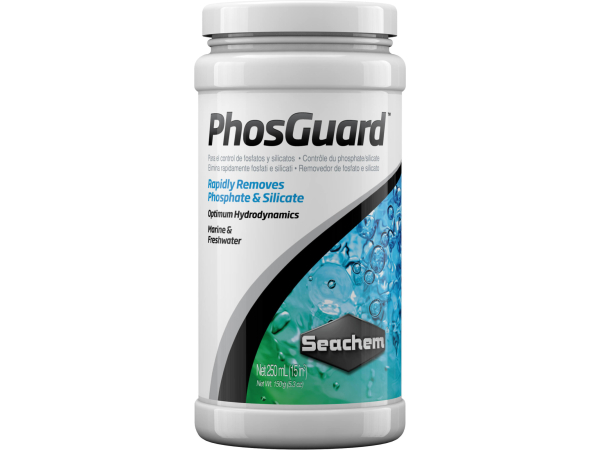
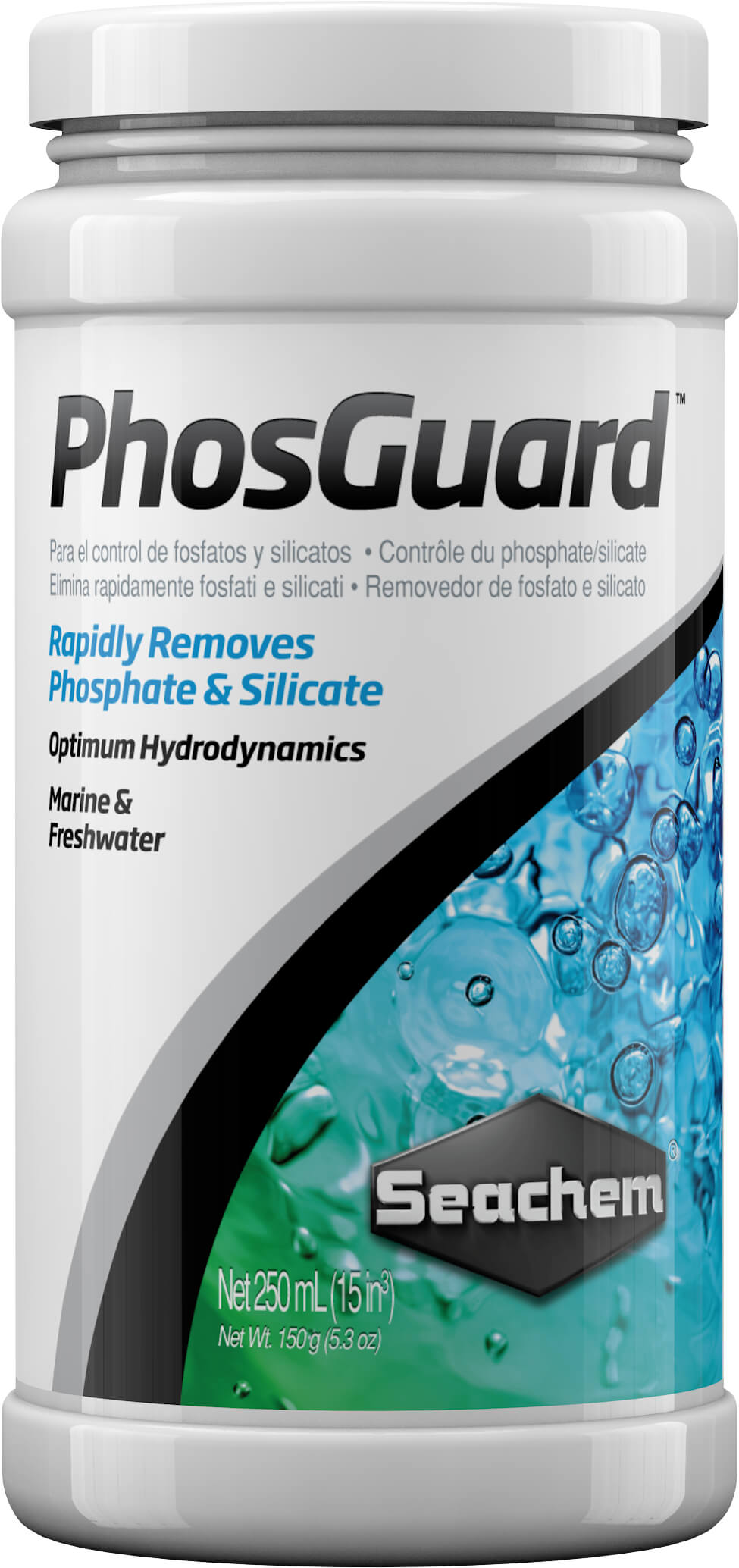



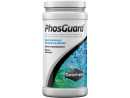
PhosGuard 250 ml Seachem removes phosphate and silicate in marine aquariums thanks to a highly porous spherical media ensuring rapid and irreversible absorption.





| Date Maximum delivery |
|
|---|---|
| Express | Tuesday 22 September |
| Pick-up point |
Tuesday 22 September
Thursday 24 September |
| Home |
Wednesday 23 September
Thursday 24 September |
| See all delivery fees | Cart amount | Delivery fees |
|---|---|---|
| Colis sur pré-commande | 0 à 158,98 € | 7,80 € |
| 158,99 à 248,98 € | Free | |
| 248,99 à 10 000 € | Free | |
| DPD Livraison en relais Pickup | 0 à 68,98 € | 6,90 € |
| 68,99 à 10 000 € | Free | |
| DPD Livraison sur lieu de travail | 0 à 10 000 € | 7,80 € |
| DPD Livraison à domicile Predict sur créneau horaire | 0 à 68,98 € | 7,80 € |
| 68,99 à 158,98 € | 7,80 € | |
| 158,99 à 10 000 € | Free | |
| En Relais GLS | 0 à 68,98 € | 6,90 € |
| 68,99 à 10 000 € | Free | |
| EXPRESS 24H Vivant - Live - Lebenden - Vivo - Levend | 0 à 248,99 € | 24,90 € |
| 248,99 à 100 000 € | Free | |
| GLS À domicile | 0 à 68,98 € | 7,80 € |
| 68,99 à 158,98 € | 7,80 € | |
| 158,99 à 10 000 € | Free | |
| Livraison palette – Pallet Delivery | 0 à 50 kg | 50 € |
| UPS Matériel Domicile EXPRESS 24H | 0 à 15 000 € | 19,90 € |
| Country | Carrier | Cart amount | Delivery fees |
|---|---|---|---|
| Europe zone 1 | Colis sur pré-commande | 0 à 158,98 € | 15,90 € |
| 158,99 à 248,98 € | 15,90 € | ||
| 248,99 à 10 000 € | Free | ||
| DPD Livraison en relais Pickup | 0 à 68,98 € | 6,90 € | |
| 68,99 à 10 000 € | Free | ||
| DPD Livraison internationale | 0 à 248,98 € | 15,90 € | |
| 248,99 à 10 000 € | Free | ||
| DPD Livraison sur lieu de travail | 0 à 10 000 € | 7,80 € | |
| EXPRESS 24H Vivant - Live - Lebenden - Vivo - Levend | 0 à 248,99 € | 29,89 € | |
| 248,99 à 100 000 € | Free | ||
| Livraison palette – Pallet Delivery | 0 à 50 kg | 259 € | |
| France | Colis sur pré-commande | 0 à 158,98 € | 7,80 € |
| 158,99 à 248,98 € | Free | ||
| 248,99 à 10 000 € | Free | ||
| DPD Livraison en relais Pickup | 0 à 68,98 € | 6,90 € | |
| 68,99 à 10 000 € | Free | ||
| DPD Livraison sur lieu de travail | 0 à 10 000 € | 7,80 € | |
| DPD Livraison à domicile Predict sur créneau horaire | 0 à 68,98 € | 7,80 € | |
| 68,99 à 158,98 € | 7,80 € | ||
| 158,99 à 10 000 € | Free | ||
| En Relais GLS | 0 à 68,98 € | 6,90 € | |
| 68,99 à 10 000 € | Free | ||
| EXPRESS 24H Vivant - Live - Lebenden - Vivo - Levend | 0 à 248,99 € | 24,90 € | |
| 248,99 à 100 000 € | Free | ||
| GLS À domicile | 0 à 68,98 € | 7,80 € | |
| 68,99 à 158,98 € | 7,80 € | ||
| 158,99 à 10 000 € | Free | ||
| Livraison palette – Pallet Delivery | 0 à 50 kg | 50 € | |
| UPS Matériel Domicile EXPRESS 24H | 0 à 15 000 € | 19,90 € | |
| Europe zone 2 | Colis sur pré-commande | 0 à 158,98 € | 39,90 € |
| 158,99 à 248,98 € | 39,90 € | ||
| 248,99 à 10 000 € | 39,90 € | ||
| DPD Livraison en relais Pickup | 0 à 68,98 € | 12,90 € | |
| 68,99 à 10 000 € | 12,90 € | ||
| DPD Livraison internationale | 0 à 248,98 € | 39,90 € | |
| 248,99 à 10 000 € | 39,90 € | ||
| EXPRESS 24H Vivant - Live - Lebenden - Vivo - Levend | 0 à 248,99 € | 39,90 € | |
| 248,99 à 100 000 € | 39,90 € | ||
| Livraison palette – Pallet Delivery | 0 à 50 kg | 359 € | |
| Suisse | Colis sur pré-commande | 0 à 158,98 € | 39,90 € |
| 158,99 à 248,98 € | 39,90 € | ||
| 248,99 à 10 000 € | 39,90 € | ||
| DPD Livraison en relais Pickup | 0 à 68,98 € | 26,90 € | |
| 68,99 à 10 000 € | 26,90 € | ||
| DPD Livraison internationale | 0 à 248,98 € | 39,90 € | |
| 248,99 à 10 000 € | 39,90 € | ||
| Livraison palette – Pallet Delivery | 0 à 50 kg | 389 € | |
| Suisse - EXPRESS 24H Vivant - Live - Lebenden - Vivo – Levend | 0 à 100 000 € | 44,90 € |
You might also like



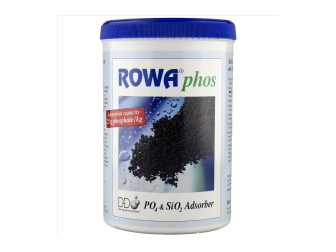
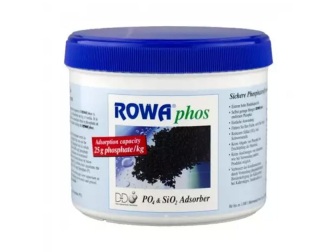


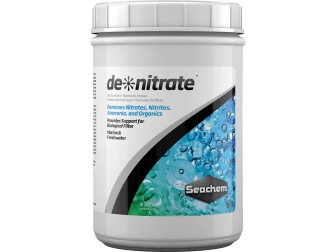

PhosGuard is a filter media developed to quickly reduce phosphate and silicate concentrations in marine and freshwater aquariums. Its highly porous structure and bead shape promote a smooth flow of water through and around the media, increasing efficiency and adsorption capacity.
Media type: spherical aluminum oxide.
Capacity: 250 ml.
Action: elimination of phosphate and silicate.
Fixation: irreversible binding.
PhosGuard works by adsorbing phosphate and silicate. This media is not an exchange resin and does not release anything into the water. It can be removed, dried, and reused until it is depleted. Continuous use of small amounts is preferable to intermittent use of large amounts.
| Product | Bound phosphate |
|---|---|
| PhosGuard (aluminum oxide) | 0.87 mg/g |
| PhosBond (hybrid GFO and alumina oxide) | 1.19 mg/g |
| PhosNet (GFO) | 1.41 mg/g |
PhosGuard can generate heat upon initial contact with water. Pre-moisten by adding the product to a double volume of freshwater, then rinse. For best results, rinse PhosGuard before use and position it to maximize water flow through the media, without it collapsing against itself during the flow.
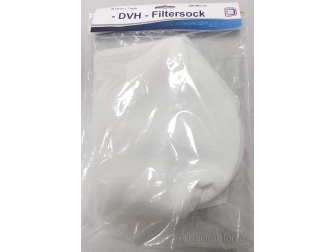
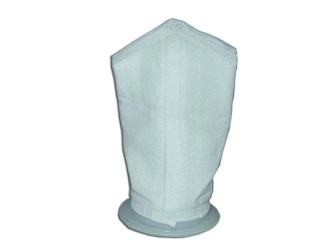
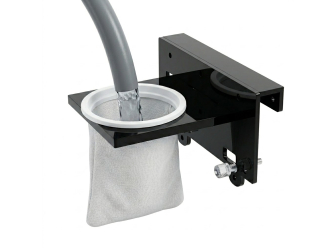
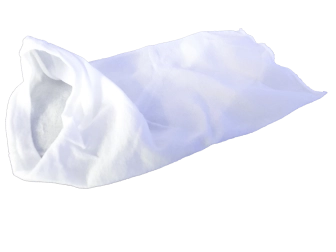
It can be used in a cartridge filter, a media chamber, a canister filter, or any high-flow area of a trickle filter. The use of a filter bag is recommended.
Dosage: use 85 ml (1/3 cup) for every 200 L of saltwater or 400 L of freshwater.
Leave the product in place for 4 days, then test the phosphate or silicate concentrations with MultiTest Phosphate or MultiTest Silicate. If the concentration of the targeted component has not dropped to about 0.02 mg/L, replace the media. Otherwise, leave it in place until the levels start to increase again.
Excessive treatment is not recommended.
PhosGuard is best used in small amounts and changed frequently. In an environment with a high phosphate level, it can be depleted quickly (4 to 5 days). Place the product in a high-flow area and test the phosphate levels, replacing as needed. When the level is below 0.2 mg/L, leave this portion in the filter and continue testing weekly until the level starts to rise again.
Aluminum oxide-based phosphate removal media are not regenerable by heating. Heating can release certain non-covalently adsorbed compounds after specific uses, but does not allow for the release of phosphate bound to aluminum oxide.
Under reef conditions (pH close to 8), no detectable release of soluble aluminum is reported. At low pH and high doses, soluble aluminum can be detected.
A temporary closure of the corals may be linked to a too rapid drop in phosphate in case of overdose. Avoid any overdose.
The use in a media reactor is not recommended, as the tumbling action can cause the production of dust by this media.
PhosGuard filtering media packaged in 250 ml, ready to be used in chemical filtration.
SEACHEM
heating
corals
Sarcophyton
PhosGuard is intended for high-flow chemical filtration. A rapid reduction of phosphate can stress some corals: prefer moderate quantities and regular monitoring of parameters.
Correspond à mes attentes
Dommage qu'une cuillère ne soit pas vendu avec pour le dosage du produit
PhosGuard 250 ml Seachem removes phosphate and silicate in marine aquariums thanks to a highly porous spherical media ensuring rapid and irreversible absorption.