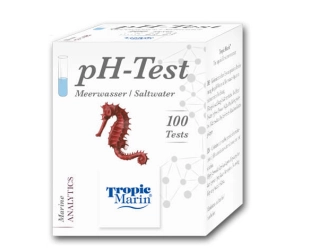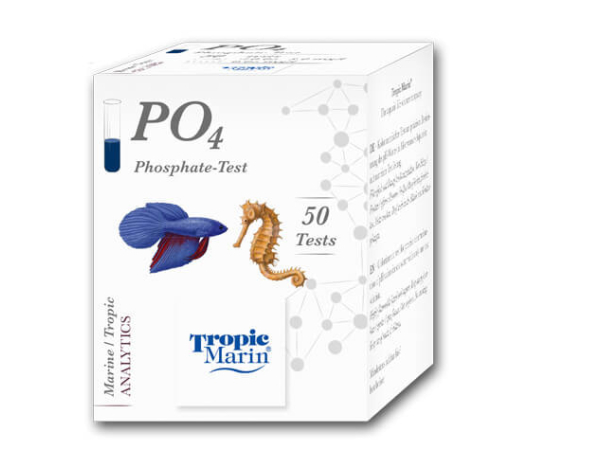




Tropic Marin phosphate test for freshwater and saltwater aquariums, allowing reliable measurement of PO4 concentrations to preserve biological balance and limit algae growth.




| Date Maximum delivery |
|
|---|---|
| Express | Tuesday 22 September |
| Pick-up point |
Tuesday 22 September
Thursday 24 September |
| Home |
Wednesday 23 September
Thursday 24 September |
| See all delivery fees | Cart amount | Delivery fees |
|---|---|---|
| Colis sur pré-commande | 0 à 158,98 € | 7,80 € |
| 158,99 à 248,98 € | Free | |
| 248,99 à 10 000 € | Free | |
| DPD Livraison en relais Pickup | 0 à 68,98 € | 6,90 € |
| 68,99 à 10 000 € | Free | |
| DPD Livraison sur lieu de travail | 0 à 10 000 € | 7,80 € |
| DPD Livraison à domicile Predict sur créneau horaire | 0 à 68,98 € | 7,80 € |
| 68,99 à 158,98 € | 7,80 € | |
| 158,99 à 10 000 € | Free | |
| En Relais GLS | 0 à 68,98 € | 6,90 € |
| 68,99 à 10 000 € | Free | |
| EXPRESS 24H Vivant - Live - Lebenden - Vivo - Levend | 0 à 248,99 € | 24,90 € |
| 248,99 à 100 000 € | Free | |
| GLS À domicile | 0 à 68,98 € | 7,80 € |
| 68,99 à 158,98 € | 7,80 € | |
| 158,99 à 10 000 € | Free | |
| Livraison palette – Pallet Delivery | 0 à 50 kg | 50 € |
| UPS Matériel Domicile EXPRESS 24H | 0 à 15 000 € | 19,90 € |
| Country | Carrier | Cart amount | Delivery fees |
|---|---|---|---|
| Europe zone 1 | Colis sur pré-commande | 0 à 158,98 € | 15,90 € |
| 158,99 à 248,98 € | 15,90 € | ||
| 248,99 à 10 000 € | Free | ||
| DPD Livraison en relais Pickup | 0 à 68,98 € | 6,90 € | |
| 68,99 à 10 000 € | Free | ||
| DPD Livraison internationale | 0 à 248,98 € | 15,90 € | |
| 248,99 à 10 000 € | Free | ||
| DPD Livraison sur lieu de travail | 0 à 10 000 € | 7,80 € | |
| EXPRESS 24H Vivant - Live - Lebenden - Vivo - Levend | 0 à 248,99 € | 29,89 € | |
| 248,99 à 100 000 € | Free | ||
| Livraison palette – Pallet Delivery | 0 à 50 kg | 259 € | |
| France | Colis sur pré-commande | 0 à 158,98 € | 7,80 € |
| 158,99 à 248,98 € | Free | ||
| 248,99 à 10 000 € | Free | ||
| DPD Livraison en relais Pickup | 0 à 68,98 € | 6,90 € | |
| 68,99 à 10 000 € | Free | ||
| DPD Livraison sur lieu de travail | 0 à 10 000 € | 7,80 € | |
| DPD Livraison à domicile Predict sur créneau horaire | 0 à 68,98 € | 7,80 € | |
| 68,99 à 158,98 € | 7,80 € | ||
| 158,99 à 10 000 € | Free | ||
| En Relais GLS | 0 à 68,98 € | 6,90 € | |
| 68,99 à 10 000 € | Free | ||
| EXPRESS 24H Vivant - Live - Lebenden - Vivo - Levend | 0 à 248,99 € | 24,90 € | |
| 248,99 à 100 000 € | Free | ||
| GLS À domicile | 0 à 68,98 € | 7,80 € | |
| 68,99 à 158,98 € | 7,80 € | ||
| 158,99 à 10 000 € | Free | ||
| Livraison palette – Pallet Delivery | 0 à 50 kg | 50 € | |
| UPS Matériel Domicile EXPRESS 24H | 0 à 15 000 € | 19,90 € | |
| Europe zone 2 | Colis sur pré-commande | 0 à 158,98 € | 39,90 € |
| 158,99 à 248,98 € | 39,90 € | ||
| 248,99 à 10 000 € | 39,90 € | ||
| DPD Livraison en relais Pickup | 0 à 68,98 € | 12,90 € | |
| 68,99 à 10 000 € | 12,90 € | ||
| DPD Livraison internationale | 0 à 248,98 € | 39,90 € | |
| 248,99 à 10 000 € | 39,90 € | ||
| EXPRESS 24H Vivant - Live - Lebenden - Vivo - Levend | 0 à 248,99 € | 39,90 € | |
| 248,99 à 100 000 € | 39,90 € | ||
| Livraison palette – Pallet Delivery | 0 à 50 kg | 359 € | |
| Suisse | Colis sur pré-commande | 0 à 158,98 € | 39,90 € |
| 158,99 à 248,98 € | 39,90 € | ||
| 248,99 à 10 000 € | 39,90 € | ||
| DPD Livraison en relais Pickup | 0 à 68,98 € | 26,90 € | |
| 68,99 à 10 000 € | 26,90 € | ||
| DPD Livraison internationale | 0 à 248,98 € | 39,90 € | |
| 248,99 à 10 000 € | 39,90 € | ||
| Livraison palette – Pallet Delivery | 0 à 50 kg | 389 € | |
| Suisse - EXPRESS 24H Vivant - Live - Lebenden - Vivo – Levend | 0 à 100 000 € | 44,90 € |


The PO4 Test Tropic Marin allows measurement of phosphate concentration in both freshwater and marine aquariums. Phosphate is an essential nutrient for cellular metabolism, but excessive accumulation can cause biological imbalances and promote algae proliferation.
| Parameter | Value |
|---|---|
| Freshwater Measurement Range | 0.03 to 3.0 mg/L |
| Marine Measurement Range | 0.03 to 3.0 mg/L |
| Measurement Precision | 0.05 mg/L |
Phosphates are essential nutrients for all plants and for the energy metabolism of every living cell. They enter aquarium water through distributed food and natural decomposition processes.
Uncontrolled increases in phosphate concentration promote excessive algae growth. In marine aquariums, it can also complicate the precipitation of calcium carbonate needed for forming the calcareous skeleton of hard corals, thus compromising their growth.
Conversely, in aquariums heavily populated with plants or corals and lightly populated with fish, phosphate can become limiting and require rebalancing.
In freshwater aquariums, a concentration up to 0.4 mg/L is generally acceptable, without exceeding 1 mg/L. A value of 0.02 mg/L is already sufficient for the nutritional needs of aquatic plants. In natural seawater, phosphate concentration is around 0.06 mg/L. In marine aquariums, it is recommended not to exceed 0.15 mg/L and to maintain coral aquariums between 0.03 and 0.1 mg/L.
| Reagent A | 18 ml |
| Reagent B | 8 ml |
| Glass Cuvettes | 2 x 10 ml |
| Dosage Syringe | 5 ml |
| Color Chart | 1 |
| Comparator | Included |
| User Manual | Included |
The measurement is carried out by colorimetric comparison. A reference cuvette is used to facilitate precise reading of the final coloration. After the development time, the obtained color is compared to the provided color chart to determine the phosphate concentration.
The reading should be performed under light close to daylight to ensure a reliable match between the sample and the reference colored area.
The reagents are usable for up to 6 months after opening. They should be stored in a dark and cool place to ensure the reliability of the results.
Regular phosphate control helps limit algae proliferation and maintain suitable conditions for freshwater and reef aquariums.
Tropic Marin phosphate test for freshwater and saltwater aquariums, allowing reliable measurement of PO4 concentrations to preserve biological balance and limit algae growth.